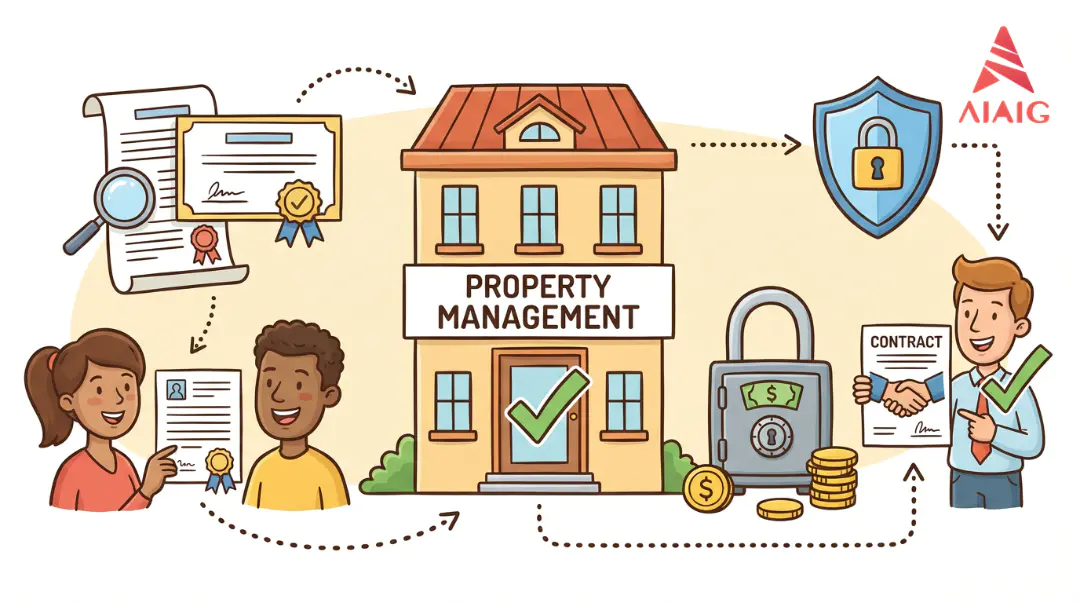
1. First, Determine the Type: Are You Looking for a "Property Management Company" or a "Broker/Short-Term Rental Operator/Property Manager"?
Many disputes arise from 'you think the other party is responsible for everything,' but the contract only states 'collect rent/find tenants.' Foreign property owners should break down property management into four categories before screening:
- Long-term rental management: Tenant acquisition, screening, contract signing, rent collection, maintenance, renewal, and lease termination.
- Short-term rental (STR / Airbnb-style) operations: Compliance registration, dynamic pricing, cleaning and linen services, customer service and complaints, platform operations, public security/tourist registration, reporting, and taxes.
- Property management within a condominium/JMB/MC/Juristic person system: Maintenance of common areas, security and cleaning, management of common funds and service fees (your personal rental may not be included).
- Portfolio/Building management for entire buildings/multiple units: Budgeting, asset preservation, insurance, renovations, supplier management, and consolidated financial statements.
Your desired 'compliant property management company' must cover the category that meets your actual needs and provide verifiable compliance paths and liability boundaries.
II. Five Hard Standards: The Underlying Logic of Compliant Hosting is "Verifiable, Isolatable, Auditable, Quantifiable, Traceable"
Turn property management company screening into five 'hard criteria' to quickly eliminate 80% of unreliable options:
1) Verifiable qualifications (Verification)
- Are the company and key personnel listed in local regulatory/industry registration directories?
- Is the business scope clearly stated (long-term rental/short-term rental/property management/brokerage)?
- Does it have a real office address, fixed contact information, and a service team structure?
2) Fund isolation (Client Money / Rent Collection)
- Do rent and deposits go into a 'client money/trust/independent account' or a provable isolation mechanism?
- Account flow: Can the owner view bank statements/account statements?
- Are the rules and approval chain for deposit refunds clearly defined (to avoid 'delays,' 'deductions,' or 'non-refunds')?
3) Auditable accounting (Accounting)
- Does it provide monthly reconciliation: rent, vacancies, fees, maintenance, taxes, and balances?
- Does it provide annual summary statements and invoice archiving?
- Are supplier quotes and invoices traceable (to avoid kickbacks in maintenance)?
4) Quantifiable services (SLA & Process)
- Tenant acquisition cycle targets, viewing response times, maintenance response times, lease termination inspections, and complaint handling deadlines.
- Cleaning/key management/inspection frequency (especially for short-term rentals or remote holdings).
- Key milestones must be 'documented': quotes before work starts, completion acceptance photos, and signed confirmations.
5) Traceable liability (Liability)
- Does it have professional liability/public liability insurance (if common locally)?
- Who bears short-term rental compliance? Who pays fines? Who is responsible for rectification and communication?
- How are responsibilities for data and privacy, keys and access control, and personnel management (cleaning/maintenance outsourcing) implemented?
If any two of these criteria are not met, do not be tempted by 'high rental returns' or 'all-inclusive convenience.'
III. Due Diligence Checklist: 10 Questions to Ask, Basically Able to See If It's "Compliant and Controllable"
You can directly copy the following 10 questions to candidate property management companies (requiring written responses + attached evidence):
- What is your registration/license/association number? Can you provide a query link and screenshot?
- Do you service long-term or short-term rentals? If short-term rentals are included, who handles compliance registration, tourist registration, and reporting?
- Where are rent and deposits collected? Can you provide an explanation of the client fund isolation mechanism and sample statements?
- How is maintenance handled? Is there a quote approval threshold (e.g., amounts over X require owner confirmation)?
- How are suppliers selected? Are owners allowed to specify suppliers?
- What fields are included in your monthly reports? Can you provide anonymous samples (including receipts/invoices)?
- How are vacancy periods handled? Is there regular inspection with photo feedback?
- How are lease termination disputes resolved? What are the deposit deduction rules and evidence chain?
- In case of violations/fines/tenant disputes, who is responsible for communication? How are costs shared?
- What are the contract termination conditions? How are keys, accounts, deposits, platform accounts, and access permissions transferred?
The value of these 10 questions lies in: if the other party 'only gives verbal assurances' but cannot provide mechanisms and samples, it is essentially high-risk.
IV. Contract Clauses That Must Be Set in Stone: Not Writing Them Equals Leaving Risks to Yourself
For foreign property owners signing a property management contract, it is recommended to consider the following clauses as "essential components" (without which compliance cannot be claimed):
- Scope of Service Boundaries: What is included and what is not (e.g., tenant recruitment/contract signing/rent collection/maintenance/taxation/short-term rental registration/guest registration).
- Funds Terms: Rent/deposit collection accounts, payment cycles, reconciliation frequency, and late payment penalties (if applicable).
- Maintenance and Procurement Process: Quotation approval thresholds, definition of emergency repairs, completion acceptance standards (e.g., photos/videos/invoices).
- Transparent Fee Structure: Management fees, tenant recruitment fees, renewal fees, move-out inspection fees, platform service fees, and clauses prohibiting markup practices.
- Compliance Responsibilities: If short-term rentals are involved, clearly define responsibilities and allocations for compliance registration, complaint handling, penalties, and suspension for rectification.
- Information and Data: Owner's access rights to contracts, invoices, reports, and platform data; data retention period.
- Termination and Handover: Advance notice period, breach conditions, and handover checklist for keys/access control/platform accounts/deposits/accounts.
A practical suggestion: Try to replace "verbal promises" with "process + time + evidence" in the contract.
- Is it necessarily reliable if a property management company says 'We are designated by the developer/recommended by the apartment property'?
- Not necessarily. A recommendation relationship only indicates 'ease of entry,' and does not equate to fund segregation, transparent accounting, or no markup on repairs. You still need to conduct due diligence based on the five hard criteria, especially regarding the flow of rent/deposits and sample statements.
- If I'm not local, how can I determine if the other party is 'misappropriating rent/falsifying repairs'?
- Focus on two points: 1) Whether they can provide verifiable payment accounts and statements; 2) Whether repairs follow a closed-loop process of 'quote-approval-completion-invoice-photos.' If this closed-loop cannot be achieved, the risk of remote property management increases exponentially.
- What is the most critical compliance point for short-term rental property management?
- The core is not 'knowing how to operate platforms,' but 'being able to operate legally and leave a trace': registration/permits, guest identity and registration requirements, complaint response, fire and safety configurations, and regular reporting (if applicable). If the other party only talks about profits and not compliance, eliminate them directly.
- Should I choose a 'large company' or a 'local small team'?
- The advantage of a large company is more standardized processes and finances, while the advantage of a small team is quick response and lower costs. The selection criteria are not based on size, but on: verifiable qualifications, segregable funds, auditable accounts, quantifiable services, and traceable responsibilities—if these are met, a small team can also be excellent.
V. Three "Ready-to-Use" Official Verification Entry Points (Examples)
Different countries have varying regulatory approaches to "property management/brokerage/short-term rental management," but you should at least learn to: verify whether the other party has the registration/qualification for the relevant business through official channels. Below are three common examples (you can replace them with local authority portals based on your country):
- Malaysia (property-related practitioner/agency inquiry): Company/personnel registration information can be searched through official directories.
- Japan's Minpaku (short-term rentals): If "management/operation" is involved, check if it falls under a business type requiring registration and review relevant requirements on the competent authority's website.
- Internationally recognized best practices for fund security: Pay attention to "client fund protection/segregation" systems and written procedures (especially for rent and deposit collection).
Last updated Feb 6, 2026