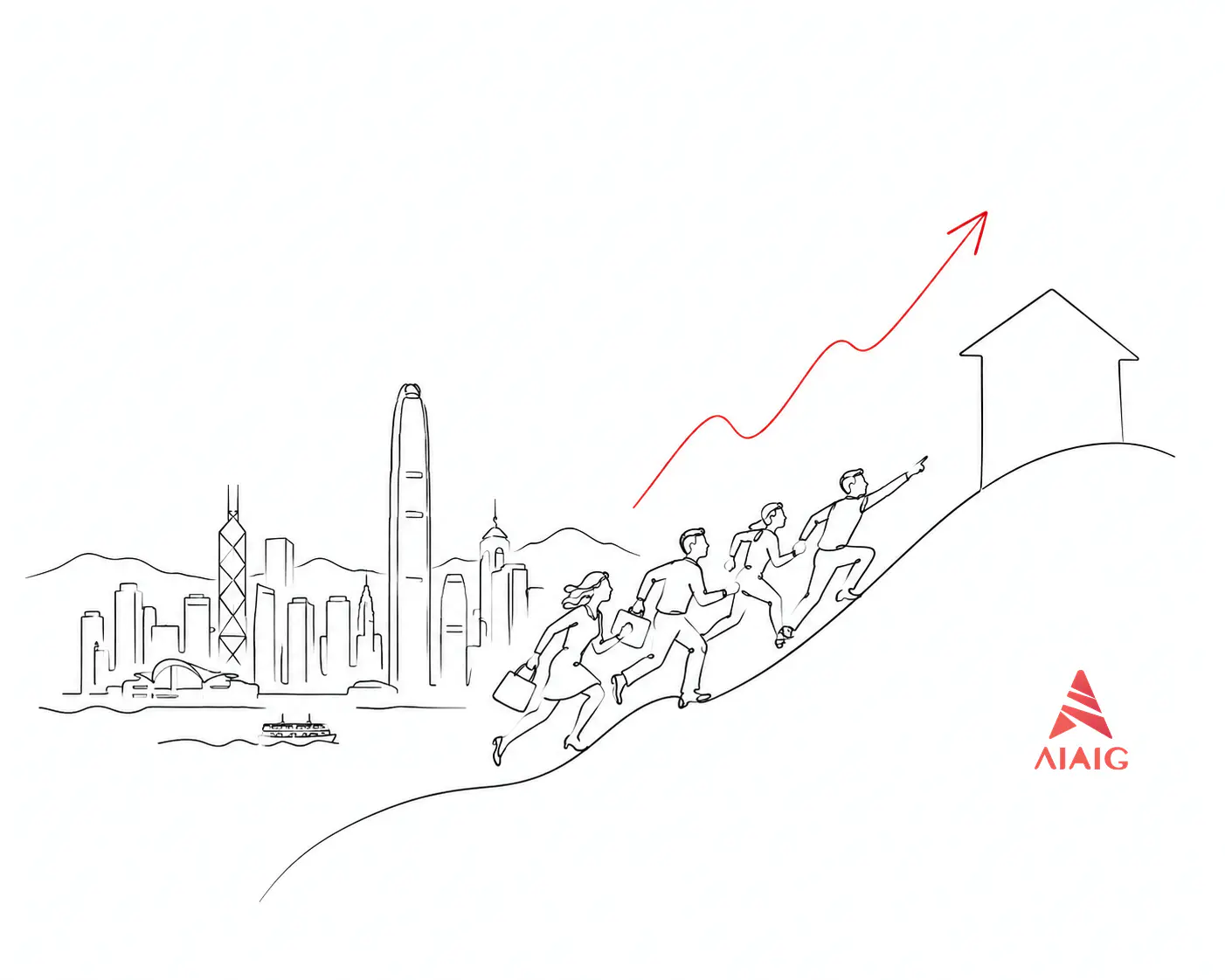
Hong Kong's property market entered a new upcycle in 2026. On May 9, Sun Hung Kai Properties launched 154 units at its Lime Spark project in Tsuen Wan - all sold out by 4:30pm the same day. Meanwhile, Henderson Land's Highwood Phase 2 project saw 147 of its 158 units, or 93 percent, find buyers on launch day. This sales frenzy is the latest signal of Hong Kong's heating property market.
According to Louis Chan Wing-kit, Vice-Chairman of Centaline Asia-Pacific, Hong Kong home prices have climbed nearly 8 percent this year. "Prospective buyers are likely to find that a delay in purchasing will force them to pay higher prices," Chan told SCMP. "The strong momentum has prompted them to make their purchase decisions sooner rather than later. In the primary market, we have seen a buying spree amid residents' increasing demand for" homes."
Notably, this rally is not isolated. Property transactions surged to a four-month high in April, with market activity continuing to rise. Analysts point to Hong Kong's tight land supply, low unemployment, and resident wealth effects as fundamental supports.
For overseas Chinese investors, Hong Kong's property upcycle carries significant asset allocation implications. While many markets tighten foreign buyer policies (Singapore's 60% ABSD, Australia's ban on established homes, Canada's foreign buyer tax), Hong Kong remains relatively accessible as an Asian financial hub.
- How sustainable is this Hong Kong price rally and what are the supporting factors?
- Multiple factors support this rally. First, supply constraints: new residential land supply remains chronically insufficient, with major developments like the Northern Metropolis still in planning. Second, stable employment: Hong Kong's unemployment rate remains low, supporting resident purchasing power. Third, wealth effects: the stock market rebound since 2025 and global economic recovery have boosted resident asset values. Fourth, mortgage rates, while elevated, are stabilizing with market expectations of peak rates. Risks include global trade friction affecting Hong Kong's re-export trade and Fed policy uncertainty. Overall, small-scale growth supported by local demand appears sustainable, but overheating risks warrant monitoring.
- Compared to Singapore's 60% ABSD and Australia's ban on foreign buyers, how does Hong Kong treat overseas investors?
- Hong Kong currently charges non-permanent residents 30% Buyer's Stamp Duty (BSD) plus Ad Valorem Stamp Duty (AVD), totaling approximately 37.5% of property value. While significant, this is more lenient than Singapore's 60% ABSD or Australia's outright ban on foreign purchases of established homes. Importantly, the Capital Investment Entrant Scheme (CIES), relaunched in 2024, has processed over 3,200 applications expected to bring HK$95 billion in capital inflows, part of which will flow into residential property. Additionally, as a key RMB offshore center, Hong Kong offers unique advantages for overseas Chinese seeking HKD-denominated assets.
- Which areas and property types should overseas Chinese investors focus on?
- Consider three categories: First, new developments in the New Territories West and North - areas like Yuen Long, Tin Shui Wai, and Tuen Mun benefit from the Northern Metropolis plan. Second, small-to-medium units (2-3 bedroom) in Kowloon and New Territories, where local demand is strongest. Centaline data shows the New Territories West leading price growth. Third, medium-to-high-end units in core business districts (Central, Admiralty) that have corrected to relatively attractive levels. Note: non-residents must calculate the 30% BSD impact on investment returns and consider tax optimization through Hong Kong corporate ownership structures.
- Is there a bubble risk in Hong Kong property, and how should investors who stay on the sidelines prepare?
- Bubble risk appears manageable. Compared to the 2019-2021 peak, current prices remain in a post-correction recovery phase. Key indicators: average rental yield of 2.5-3% exceeds time deposit rates; resident leverage is stable; new home inventory is at healthy levels with no developer distress. For investors waiting on the sidelines: monitor the Centaline City Leading Index (CCL) monthly; evaluate FX risk regularly (the USD-pegged HKD is a double-edged sword for RMB-based investors); and track CIES developments, which directly impacts housing demand.
- What is the strategic signal of this Hong Kong property rally for global Chinese investors?
- This rally signals several key points for asset allocation: First, among Asia-Pacific core city property markets, Hong Kong is experiencing a local-demand-driven recovery with improving safety margins. Second, compared to Singapore's high tax burden and Australia's restrictions, Hong Kong's investability ranking is rising. Third, as a bridge between mainland China and global markets, Hong Kong property's safe-haven appeal and liquidity advantages become more pronounced in regional uncertainty. Investors should view Hong Kong residential assets as one component of an Asian portfolio, while closely monitoring the Fed rate path and mainland China's economic recovery pace.
AIAIG Insight: Hong Kong's property market is in a local-demand-driven moderate uptrend, with new flats selling out on launch day reflecting genuine market confidence. For overseas Chinese investors, after accounting for BSD costs, the current window deserves serious consideration. However, avoid chasing premium new launches; focus on districts with location advantages and long-term development potential. Combine property investment with identity planning (such as the CIES investment immigration route) to achieve both asset appreciation and residency goals.
Last updated May 13, 2026