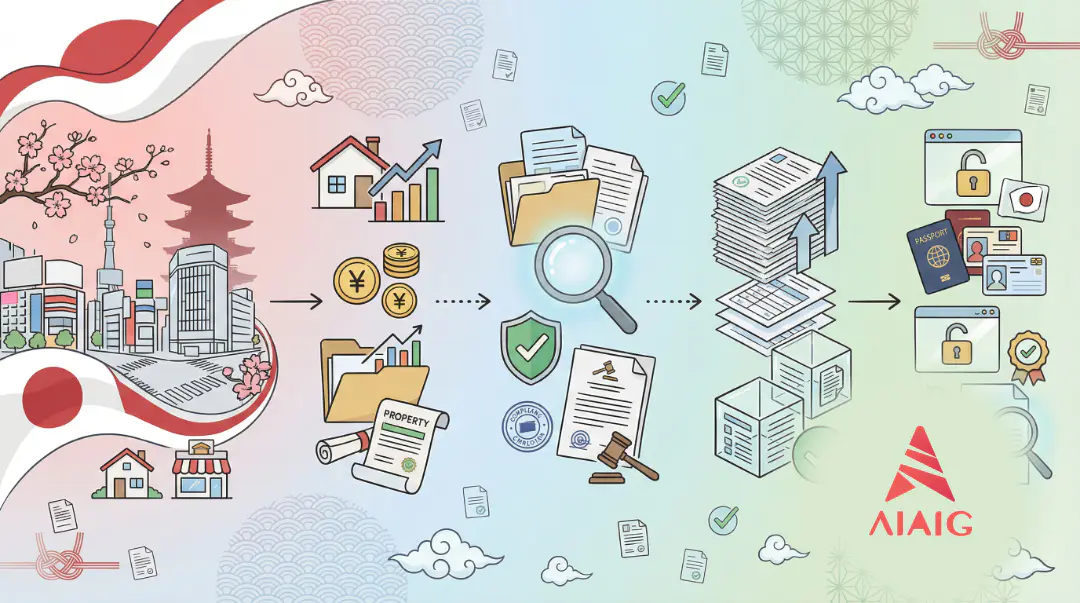
1) Core Conclusion: Not 'Ban on Purchases', but 'First Digitalize, Then Differentiate'
Japan's key changes still revolve around 'transparency in foreign property purchases'. For overseas buyers, the essence is two things:
- Expansion of reporting scope: Moving from 'only investment purposes require reporting' to 'including residential purchases also requiring reporting', to more comprehensively grasp foreign participation and speculative transaction risks.
- Improvement of registration information (nationality disclosure): Requiring passports or other nationality proofs in the ownership registration process (directional measures), providing underlying data for subsequent statistics and policy design.
AIAIG perspective: This is not a blanket 'purchase ban', but more like a typical governance path—first making the data scope comprehensive and solidifying identity and transaction chains, then enabling more refined differentiated arrangements for hotspot areas, asset types, and transaction frequencies.
2) Key Change One: Reporting Obligation Proposed to Extend to "Residential Use"
According to a Reuters report on 2025-12-16, the Japanese government plans to revise current rules: previously, declarations for property purchases by non-residents/foreigners mainly covered "investment purposes," and it is proposed to extend this to include residential purpose purchases, in order to "grasp the full picture," address cases of residential purchases considered related to speculation, and set April of the following year as the target implementation date (subject to the final implementation guidelines from authorities).
The significance of this declaration extension lies in:
- More complete statistical scope: Bringing transactions under the "self-occupation/residence label but potentially speculative" into the same regulatory view.
- More actionable risk identification: Facilitating structured profiling of entities concentrated in hot cities, hot assets, and short-term transactions.
- Richer policy toolkit: Future differentiated arrangements (such as stricter information disclosure, tiered review intensity, etc.) require underlying data support first.
Japan plans to expand the reporting requirement for foreign purchases of real estate from 'investment purposes only' to 'including residential use', in order to more comprehensively grasp foreign capital participation and speculative risks, and has proposed April of the following year as the target for implementation.
3) Key Change Two: Clear Direction on "Nationality Disclosure/Nationality Proof" in the Registration Process
In the process of real estate ownership registration, Japan is discussing/advancing the introduction of a "nationality information" field: requiring newly registered property owners to provide passports or other nationality proofs, to deposit nationality information into the real estate registration database, providing underlying data for subsequent statistics, policy evaluation, and governance.
Points to note:
- This direction does not equate to "restricting purchase qualifications", but rather resembles incorporating "buyer identity elements" into the registration data structure.
- If implemented, it would promote in practice: stricter consistency of identity information (such as passport name spelling, address, proof of residence, etc.) and a more rigorous chain of compliance documents.
- Due to the parallel existence of existing registration, tax, and financial institution KYC/anti-money laundering processes in Japan, the addition of this field may lead to more "cross-verification" in practical operations.
Japan is discussing requiring new property owners to disclose their nationality in the real estate registration database and submit nationality proof such as passports during registration to support subsequent statistics and policy design.
- What is the most realistic short-term impact for overseas buyers?
- It's usually not 'cannot buy,' but 'harder to buy smoothly.' The most direct changes will be reflected in:
- Earlier preparation of documents: Identity information consistency (passport spelling/name order/address), proof of residence or nationality, and explanations of fund sources when necessary need to be prepared earlier.
- Transactions being incorporated into a more systematic statistical and review framework: Hotspot areas and high-value assets are more likely to require additional explanations or undergo longer verification cycles.
- Decreased tolerance for frequent transactions/short-term flipping: Even if regulations don't state 'prohibited,' practical friction (additional documents, delays, explanation obligations) will significantly increase. - Will this evolve into a 'foreign capital purchase ban'?
- Based on current public information, it seems more like a preliminary stage of 'transparency + data governance': first, complete the reporting standards and solidify registration data, then assess whether differentiated arrangements are needed for specific areas/assets/transaction models. In the short term, focus should be on compliance document chains and transaction cycle management.
- In transaction practice, what are the most common pitfalls?
- - Inconsistent identity information: Passport name spelling, address proof, signature name mismatched with account opening/remittance information, which can easily trigger repeated requests for additional documents.
- Insufficient explanation of fund paths: Cross-border remittance sources, account relationships, arrangements like gifts/loans lacking written materials, which can easily lead to requests for supplementary explanations.
- Overly optimistic time expectations: New reporting/disclosure requirements will lengthen verification chains; it's recommended to include 'settlement cycles may be longer' in planning. - Action checklist: What should be prepared now?
- It's recommended to create a 'transaction document package' and standardize the approach upfront:
1) Standardize passport and name spelling (consistent with that used by banks/agents/legal scriveners)
2) Proof of address/residence and translation documents (notarized/certified if necessary)
3) Fund source materials: Salary/business/asset disposal/gift or loan agreements, etc.
4) Tax and reporting cooperation: Prepare possible reporting information and authorization materials as required locally
5) Transaction frequency management: Avoid short-term multiple entries and exits for similar assets to reduce the probability of being flagged
Last updated Jan 13, 2026