Kazakhstan 2026 Policy Signals: Inflation at 9.80%, GDP Up 4.10%, Q2 FDI Inflows of USD 3.536 Billion
Kazakhstan's August inflation fell to 9.80%, stabilising at the lower bound of single digits for the first time. Q2 GDP grew 4.10%, FDI net inflows reached USD 3.5368 billion, nominal wages rose 5.4% QoQ to KZT 486,388, and unemployment held at 4.50%. The housing index slipped from 114.60 to 113.10. This article breaks down the allocation implications of this policy window.
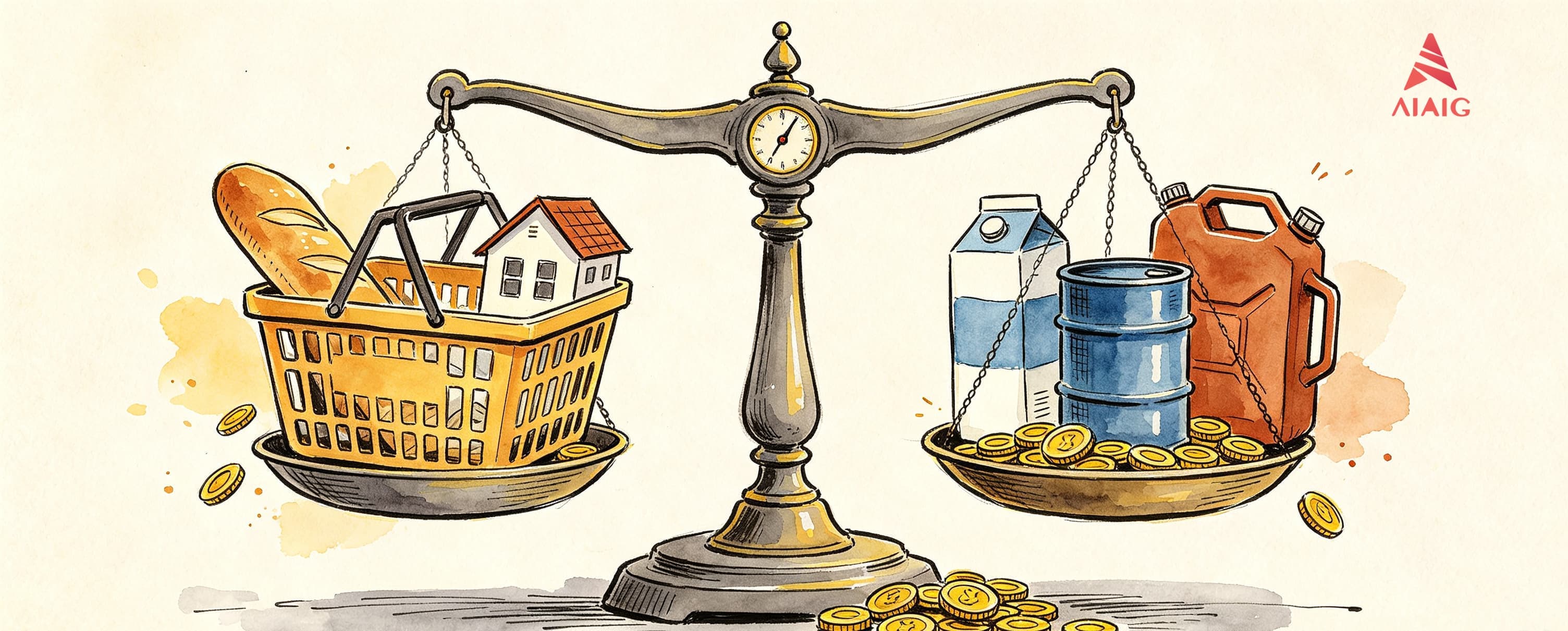
Kazakhstan 2026 Policy Signals: Inflation Falls to 9.80%, GDP Grows 4.10%, Q2 FDI Inflows Reach USD 3.536 Billion
The latest data from Kazakhstan's Bureau of National Statistics and Trading Economics shows the country's inflation rate fell to 9.80% in August 2026, down 0.40 percentage points from 10.20% in July, continuing a sustained disinflation trend from the peak earlier this year. This reading marks Kazakhstan's formal exit from double-digit inflation territory, opening room for a monetary policy pivot.
Meanwhile, Kazakhstan's Q2 2026 GDP grew 4.10% year-on-year, maintaining a solid lead among the five Central Asian states. Q2 foreign direct investment (FDI) net inflows reached USD 3.5368 billion, reflecting continued international interest in the country's energy transition and logistics hub development. On the labour front, the Q2 unemployment rate held at 4.50%, unchanged from Q1 and within a historically low range. Nominal average monthly wages rose to KZT 486,388, up 5.4% from KZT 461,486 in Q1, delivering positive real wage growth against falling inflation.
The property side, however, shows signs of mild cooling. Kazakhstan's housing price index came in at 113.10 in August 2026, down 1.3% from 114.60 in July. This pullback diverges in the short term from improving real household purchasing power and warrants closer analysis.
For overseas Chinese investors watching Belt-and-Road corridor assets and Central Asian market opportunities, Kazakhstan currently presents a classic policy window of “macro improvement with mild asset price adjustment.” This article breaks down the real meaning of this combination across inflation, growth, foreign investment, employment, and real estate.
A Structured Breakdown of the Policy Signals
1. Inflation at 9.80%: The Critical Threshold for Policy Normalisation
Kazakhstan's inflation falling from 10.20% to 9.80% looks modest in magnitude but is highly significant — this is the first time since 2025 that the country has stabilised at the lower bound of single digits. Three factors drive the disinflation:
First, the tenge has remained relatively stable in 2026, easing imported goods price pass-through. Second, domestic food price gains have narrowed on the harvest season and improved supply. Third, the tight policy rate maintained by the National Bank of Kazakhstan (NBK) has effectively suppressed aggregate demand.
For investors, inflation at 9.80% means the rate-cut window has materially opened. Historical patterns show the NBK typically begins a cutting cycle within one to two quarters after inflation stabilises in single digits. Rate cuts directly reduce local financing costs, supporting residential mortgages and corporate expansion — which explains why the housing index's modest pullback from its 114.60 high is broadly read as “healthy turnover” rather than a “trend reversal.”
2. GDP Growth of 4.10% and FDI Inflows of USD 3.537 Billion: Verifying Growth Quality
Q2 GDP grew 4.10% year-on-year, leading Central Asia. More notable is the growth structure: Kazakhstan is transitioning from pure energy-export dependence toward a diversified mix of transit logistics, energy processing, and digital services.
Q2 FDI net inflows reached USD 3.5368 billion, an absolute leader among the five Central Asian states. Foreign capital is concentrated in three directions:
| Sector | Driver | Implication for Asset Allocation |
|---|---|---|
| Energy and mineral processing | Critical mineral demand from the global energy transition | Higher cash-flow stability for upstream assets and related industrial property |
| Transit logistics infrastructure | Expansion of China-Europe rail and Trans-Caspian routes | Warehousing and commercial property benefit in hub cities such as Almaty and Aktau |
| Digital and financial services | Localised data centres and fintech expansion | Structural growth in office demand and skilled-worker housing |
It should be noted that FDI sustainability depends heavily on Central Asian geopolitical stability. Investors should factor policy continuity risk into their discount rate.
3. Unemployment at 4.50% and Wages Up 5.4%: The Domestic Demand Base Is Strengthening
The Q2 unemployment rate held at 4.50%, while nominal average monthly wages rose from KZT 461,486 to KZT 486,388, a 5.4% quarter-on-quarter increase. With inflation at 9.80%, real wage growth remains eroded but the scissors gap has clearly narrowed — meaning real household purchasing power is bottoming out and recovering.
For the residential market, positive wage growth underpins owner-occupier demand. This is also the key to understanding August's housing index pullback: it came alongside an interim period of rising wages with credit costs not yet falling, a classic “waiting-for-rate-cuts adjustment” rather than a demand collapse.
4. Housing Index at 113.10: Judging the Nature of the Pullback
The housing index fell from 114.60 to 113.10 (-1.3%), a modest decline. In the macro context:
Factors supporting a short-term pullback: falling inflation, rising wages, strong FDI, low unemployment, and clear rate-cut expectations — all five point to medium-term demand support.
Downside risks to watch: first, cumulative gains have already been substantial, with structural overvaluation in some cities (notably Almaty and Astana); second, should the tenge come under renewed external pressure, rising imported construction-material costs would erode developer margins; third, volatility in transit-logistics revenue could affect rental stability for commercial property in hub cities.
5. Specific Implications for Overseas Chinese Investors
Kazakhstan's allocation value lies in the dual overlay of institutional dividend and geographic hub position. The Astana International Financial Centre (AIFC) adopts English common law, offers tax incentives, and provides English-language judicial services — one of the few Belt-and-Road jurisdictions with common-law protection. For Chinese enterprises needing to establish Central Asian trade settlement, holding platforms, or logistics nodes, this design significantly reduces legal uncertainty.
At the same time, property allocation should remain restrained: the housing index sits in a mild correction channel at 113.10 and local mortgage rates remain high. We recommend prioritising commercial and warehousing property in hub cities (cash flow benefiting from logistics expansion) rather than chasing short-term residential price spreads.
AIAIG View: Kazakhstan Is a Window Market Where “Institutions Lead, Real Estate Follows”
Across five dimensions, Kazakhstan's current economic picture can be summarised as: inflation clearing, steady growth, favoured by foreign capital, recovering wages, mildly adjusting real estate.
Our core conclusions are threefold:
First, seize the early positioning opportunity in the rate-cut window. Inflation falling from 10.20% to 9.80% and stabilising at the lower bound of single digits is a key precursor to a policy pivot. Historical patterns show the NBK typically begins cutting within one to two quarters of this signal. For investors needing local financing, the window before cuts land often corresponds to the best asset negotiation space. We recommend completing target screening and due diligence in Q4 2026.
Second, favour cash-flow assets over spread-driven assets. With the housing index down from 114.60 to 113.10 and local mortgage costs still high, the logic of profiting from short-term residential appreciation is not solid. By contrast, the energy processing, transit logistics, and digital services sectors indicated by USD 3.537 billion in FDI inflows generate warehousing, industrial, and office demand with greater rental cash-flow certainty. We recommend focusing allocation on commercial and logistics property in hub cities such as Almaty and Aktau.
Third, leverage AIFC's institutional advantages as a structuring anchor. The English common law system, tax incentives, and English-language judicial services provided by the Astana International Financial Centre make it a rare rule-of-law platform along the Belt and Road. For Chinese enterprises needing Central Asian trade settlement, cross-border holding, or fund pooling, using AIFC as a regional structuring anchor often delivers more value than the spread on any single property.
Risk warning: Kazakhstan's economy is highly sensitive to energy prices and transit trade volumes. Geopolitical shifts, tenge exchange-rate volatility, and demand cycles in major trading partners could all disrupt these conclusions. Although the housing index pulled back only mildly by 1.3%, some core cities are structurally overvalued. Investors should strictly distinguish between commercial property in hub cities and speculative residential assets, and control exposure to any single market.