Hidden Cost Checklist for Buying Property Overseas (Maintenance, Vacancy, Taxes, Exchange): The "Cash Flow Stress Test" You Must Do Before Buying (2026 Update)
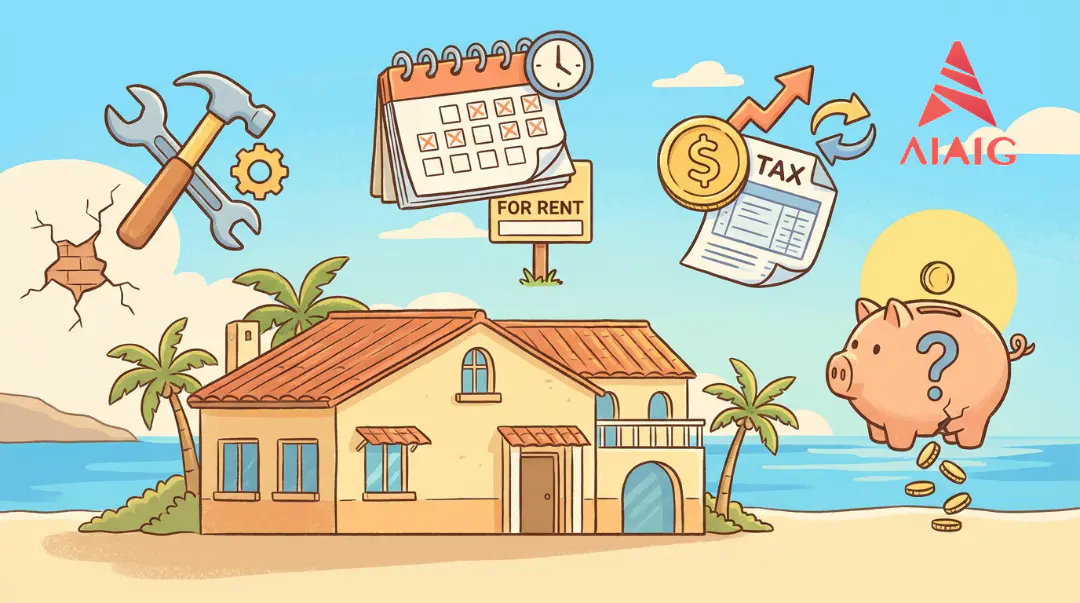
Many overseas real estate investments 'seem to have good returns,' but are actually eroded by hidden costs:
- Maintenance and Major Repairs of Common Areas: Management fees/property fees are just the surface; the real risks are 'insufficient major repair funds, temporary surcharges, and cost spikes due to aging facilities.'
- Vacancy and Tenant Turnover: Overseas rentals are not 'always fully occupied'; vacancies during turnover, relisting, renovations, cleaning, and move-out repairs are the sources of cash flow fluctuations.
- Taxes and Compliance: From purchase taxes, holding taxes, rental withholding taxes, to capital gains/transaction taxes upon sale, any miscalculation can directly alter net returns.
- Currency Exchange and Cross-Border Fund Costs: Both the one-time purchase payment and ongoing monthly returns (rent) are affected by 'bank spreads + wire transfer fees + exchange rate fluctuations + time lags.'
The table below is the core of this article: you just need to fill in the numbers by column to turn 'nominal returns' into 'real net returns.'
| Cost Module | Common Components | Impact Method | Evidence/Documents You Need to Obtain |
|---|---|---|---|
| One-Time Purchase Costs | Transaction taxes, registration fees, lawyer/agent fees, loan fees | Increase actual purchase cost | Fee breakdown, official rate links, contract terms |
| Fixed Holding Costs | Property/management fees, insurance, annual taxes | Reduce net rental income | Management fee bills, insurance quotes, annual tax statements |
| Variable Holding Costs | Major repairs/renovations, equipment replacement, temporary special levies | Cause 'spike years' | Repair fund balance, past major repair records, homeowners association meeting minutes |
| Rental Operation Costs | Property management/rental agency fees, turnover cleaning and repairs, advertising | Extend vacancies, consume cash flow | Management contracts, historical vacancy periods, quotes |
| Tax and Compliance Costs | Rental taxes, withholding taxes, filing costs, sale taxes | High uncertainty | Local tax guides, filing procedures, accountant quotes |
| Currency Exchange Costs | Spreads, handling fees, hedging costs, exchange rate fluctuations | Determine 'real returns in home currency' | Bank/remittance institution rates, historical exchange rate ranges |
It is recommended that you aim to: first calculate whether the cash flow in the 'worst year' is positive, then discuss returns.
1. Divide overseas property costs into three stages: purchase (one-time) / holding (annual) / exit (one-time)
You can use this "Cost Breakdown" to quickly establish a global perspective:
A. One-Time Purchase (Closing/Completion)
- Government/registration fees (proportional or fixed)
- Lawyer/notary/translation/due diligence
- Brokerage fees
- Loan origination fees, appraisal fees, mortgage registration fees
- Renovation, furniture, and delivery standards (common for overseas rentals: must be move-in ready for easy renting)
B. Annual Holding (Ongoing)
- Management fees/property fees/service fees (especially significant for apartments)
- Insurance (home, public liability, tenant-related coverage)
- Annual taxes (property tax, land tax, local taxes)
- Property management/rental service fees
- Utility fees (e.g., minimum bills during vacancy)
C. One-Time Exit (Exit)
- Sales brokerage fees
- Sales-related taxes (may include capital gains tax/local transaction tax)
- Closing repairs, cleaning, staging (to enhance curb appeal)
- Fund repatriation costs (spread + fees + time difference in receipt)
You will find:
- "One-time purchase costs" determine your actual purchase price;
- "Annual holding costs" determine your actual net rental income;
- "One-time exit costs" determine your actual IRR (many people only calculate rental income, not exit costs).
II. Maintenance and Overhaul: Why Are Apartments More Prone to "Cost Spikes" Than Single-Family Homes?
What is most easily underestimated when buying property overseas is not 'minor repairs and touch-ups,' but major repairs to common areas: elevators, exterior walls, waterproofing, pipelines, parking garages, swimming pools, and clubhouses.
1) Typical structure for condominiums: management fee + major repair fund/maintenance reserve
- Common in Japanese condominiums: monthly management fee + repair reserve fund (for future large-scale repairs). When the building reaches a certain age, major repair plans can significantly impact monthly expenses and one-time special levies.
- Common in Malaysian stratified properties: maintenance fee + sinking fund (often linked to a repair fund), managed by JMB/MC according to bylaws.
- Common in Dubai: service charges (comprising property/community maintenance and common area services), which directly affect net rental income and buyer affordability.
- Common in the UK (especially leasehold condominiums): service charge/ground rent/administration charges, and increases in service charges can affect resale value and tenant acceptance.
2) Four 'maintenance risk questions' you must ask
- Have management fees/service charges increased in the past 3 years? What were the reasons for the increase (insurance, repairs, energy, outsourcing)?
- What are the major repair plans for the next 2-5 years? Are there any projects that have already been voted on?
- Is the repair fund balance sufficient? Have there been any 'special levies' (special levy/one-off contribution)?
- Key equipment lifespan: Are elevators, roof waterproofing, air conditioning systems, and fire safety systems nearing their replacement cycles?
3) Rule of thumb (for quick screening)
- You can consider 'annual management fee/service charge + estimated average major repair amortization' as a form of 'hidden interest.'
- If this expense accounts for too high a proportion of the annual rent, even a high nominal rent might turn into 'a lot of effort for little gain.'
It is recommended to add a separate line in your cost table: 'reserve for major repair spike years' (e.g., conduct a stress test at 5%-15% of annual rent, depending on the property's age and facility complexity).
III. Vacancy and Operation: The Real Cost of Overseas Rental is Not 'Management Fees', but 'Vacancy + Turnover Friction'
Many people only see the 'management fee of 5%-10%', but what truly eats into returns are:
1) Vacancy Period
- Seasonal, semester-based, expatriate cycle changes, and homogeneous competition in properties can all lead to vacancy.
- During vacancy, there may still be: management/service fees, minimum utility bills, internet retention fees, and insurance premiums.
2) Turnover Costs
- Relisting and showing costs (by rental agents/real estate agents)
- Cleaning, pest control, and soft furnishing repairs
- Appliance wear and updates (water heaters, air conditioners, washing machines, etc.)
- Deposit disputes and maintenance conflicts
3) Bad Debt and Dispute Costs (often completely overlooked)
- Late/non-payment of rent, legal and collection efforts
- Property damage exceeding the deposit
- Neighbor complaints/property management penalties (especially with short-term rentals)
Actionable Stress Tests (recommended to include in your property selection SOP)
- Scenario 1: 1 month of vacancy per year + turnover every 2 years → calculate net rental income shrinkage.
- Scenario 2: Service fee increase of 10% + one-time special levy for major repairs → does cash flow turn negative?
- Scenario 3: Local currency depreciation of 5%-10% against RMB/USD → can repatriated returns still cover interest and holding costs?
You'll find that the real 'stability' in overseas property investment isn't high rent, but short vacancy, smooth turnover, and few disputes.
Four, Taxation: Don't Just Look at the Tax Rate, Look at the "Tax Chain" (Buy-Hold-Rent-Sell)
The most common pitfall in taxation is: you think there's only one tax, but in reality, it's a series of taxes.
1) Common Taxes in the Purchase Stage
- Transaction taxes, registration fees, stamp duty/transfer fees (varies greatly by location).
- In Dubai, common DLD transfer fees (based on a percentage), and a series of closing-related costs.
- In Thailand, transfers typically involve a combination of transfer fees, stamp duty/specific business tax, withholding tax, etc. (and the allocation between buyer and seller may be specified in the contract).
2) Common Taxes in the Holding Stage
- Annual property tax/local tax (different countries use different tax bases: assessed value, land value, building value, etc.).
- For apartments, management fees/service fees are added (many people treat them as "property fees," but their uncontrollable increases are more like a "tax").
3) Common Taxes and Compliance Costs in the Rental Stage
- Rental income tax + declaration costs (accounting/tax filing)
- Withholding tax mechanisms: for example, non-resident landlords in the UK (NRLS) may involve tax withholding and registration requirements during rent payment.
4) Common Taxes in the Sale Stage
- Capital gains tax/real estate transaction tax/seller's tax, etc.
- Sale agent fees and closing repair costs are often overlooked but significantly impact IRR.
Practical Advice
- Always use the "net rental" approach: annual rent - management fees/service fees - insurance - maintenance reserve - vacancy allowance - taxes - property management.
- Always conduct "exit sensitivity" analysis: if the future sale price is 5%-10% lower than the purchase price, can you still break even?
- Q1: What are the top three hidden costs most easily overlooked when buying property overseas?
- Typically, they are (1)increases in apartment service fees/management fees and special levies for major repairs, (2)vacancy and tenant turnover costs, and (3)exchange rate spreads and fluctuations. These three factors can quickly bring the 'nominal rental yield' back to reality.
- Q2: How can I quickly assess whether the net return on this property is reliable using a simple method?
- Conduct a stress test using the 'net rental yield' approach:
Annual rent - management fees/service fees - insurance - maintenance reserves - vacancy allowance - taxes - property management fees.
Then, add two scenarios: a 10% increase in service fees and one month of vacancy per year. If the result remains positive and cash flow is stable, it falls within the investable range. - Q3: Why do apartments, compared to detached houses, more easily experience a collapse in returns even with the same rental income?
- Because the costs for common areas in apartments are more concentrated and less controllable: elevators, exterior walls, waterproofing, parking garages, clubhouses, etc. Once they enter a major repair cycle or insurance/outsourcing costs rise, service fees and special levies can experience 'sudden jump years'. Detached houses involve more 'repairs you can control yourself', but they also face significant one-time repair expenses.
- Q4: How exactly are exchange costs calculated, and what should I focus on?
- Focus on three things:
1) Single remittance fees (wire transfer/intermediary bank fees)
2) Exchange rate spreads (the most hidden, potentially more expensive than fees)
3) Exchange rate fluctuations (time lags and strategies for batch currency exchange)
It is recommended to estimate 'spreads + fees' separately for the purchase price and annual returns, then consider scenarios with 5%-10% exchange rate fluctuations. - Q5: What 'compliance and documents' should I prepare in advance for overseas rental properties to reduce disputes?
- At a minimum, prepare: proof of rentability/summary of property rules, lease template (including maintenance responsibilities and delivery standards), deposit and move-out inspection checklist, property management contract with fee details, tax filing procedures and necessary registration requirements. Most importantly, include property rules such as 'parking/pet/short-term rental restrictions/noise' in the lease and delivery instructions.
===Related Keywords/Search Intent Expansion (for internal linking and topic selection)===
- Overseas property purchase holding cost calculator|How to calculate net rental yield|How to calculate IRR
- Why do apartment service fees increase|Service charge disputes|Risk of insufficient major repair funds
- How to control vacancy periods for overseas rentals|Is property management reliable|Tenant screening and deposit disputes
- Comprehensive guide to overseas property taxes|Non-resident rental withholding tax|Rental tax filing
- Cross-border remittance costs for property purchase|How to calculate bank spreads|Hedging/batch exchange rate strategies
Article directions that can be further broken down:
- "Comparison of apartment service fee systems in different countries: UK leasehold vs Dubai service charge vs Japan management fee/repair reserve fund vs Malaysia maintenance+sinking fund"
- "Vacancy control for overseas rentals: Pricing, furniture standards, lease term strategies, tenant turnover SOP"
- "How exchange rate fluctuations affect property returns: Demonstration with real cases (one-time purchase vs monthly returns)"
Last updated Jan 27, 2026