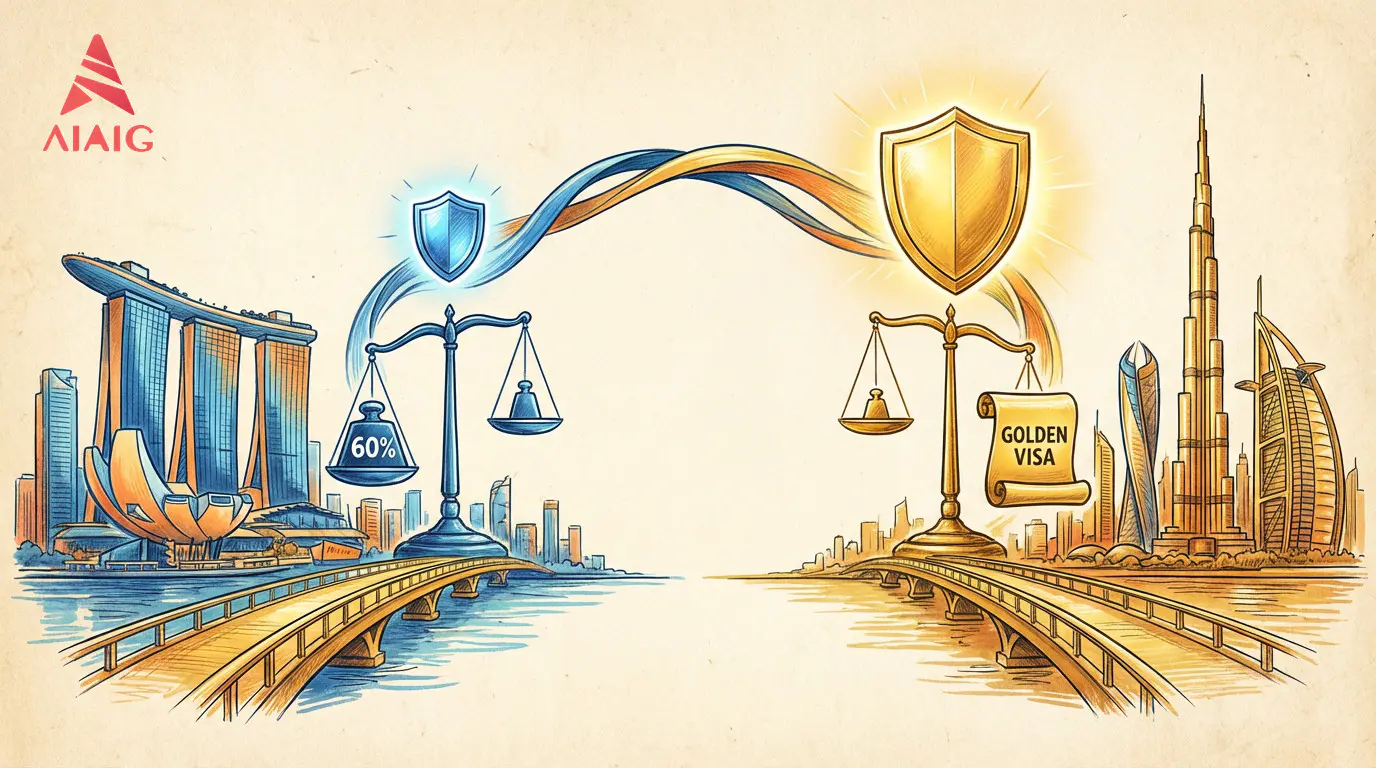
In 2026, Asia's two premier asset safe havens, Singapore and Dubai, are demonstrating starkly contrasting policy approaches to attracting overseas real estate investment. Singapore, operating from a position of budget surplus and fiscal prudence, maintains its hefty 60% Additional Buyer's Stamp Duty (ABSD) on foreign property buyers—a policy that continues to weigh on high-end residential sales in the Core Central Region. Meanwhile, Dubai persists with its AED 2 million (approximately US$540,000) real estate investment threshold for its Golden Visa program, actively attracting global capital inflows.
The policy divergence between these two financial hubs reflects different economic development strategies: Singapore relies on its accumulated financial stability, rule of law, and safe-haven reputation to attract capital even under heavy taxation, while Dubai competes aggressively for global high-net-worth asset allocation through low taxes, high liquidity, and investor-friendly policies. For overseas Chinese investors, understanding the logic behind this divergence is critical for informed decision-making.
Sources
- Why would anyone invest with Singapore's 60% property tax being so high?
- Singapore's core value lies in its 'safe-haven asset' status. While the 60% ABSD significantly increases investment costs, for high-net-worth individuals from markets like China, Singapore property offers: 1) Political and economic stability, 2) Transparent and protected property rights, 3) Currency diversification through SGD assets, 4) Long-term appreciation potential as Asia-Pacific's financial hub. These advantages make it a preferred destination for capital preservation and legacy planning, not short-term speculation.
- What advantages does Dubai's Golden Visa policy have compared to Singapore?
- Dubai's Golden Visa offers several advantages hard to match in Singapore's high-tax environment: 1) Clear investment threshold (AED 2M, ~US$540K), 2) No additional property purchase taxes with rental yields typically 6-8%, 3) Tax benefits (no capital gains tax, no property tax), 4) Long-term residency rights (renewable), 5) Geographic positioning connecting Asia-Africa-Europe, suitable as a regional business hub. More attractive for investors seeking cash flow and asset liquidity.
- What are the 2026 return expectations for both markets?
- Singapore: Core Central Region prices may remain under pressure, but constrained supply (government land control) and GDP growth forecast (2.2%) support medium-to-long-term value. Suitable for long-term holders prioritizing capital preservation. Dubai: Relatively abundant supply, strong tourist and expatriate demand, high rental yields, but higher price volatility. Suitable for investors seeking rental income and medium-term capital appreciation. The choice depends on risk appetite, investment horizon, and tax planning needs.
- Will this policy divergence continue? How should investors respond?
- This policy divergence will likely persist: Singapore's fiscal position is strong, no need to stimulate economy through real estate; Dubai continues treating property as an economic diversification pillar. Investors should adopt 'strategic allocation': use Singapore property as core preservation assets (long-term, defensive), and Dubai property as yield enhancement tools (medium-term, cash flow oriented). Monitor policy fine-tuning signals, such as whether Singapore reduces taxes on ultra-luxury properties or Dubai adjusts Golden Visa thresholds.
Last updated Apr 12, 2026