Policy Summary
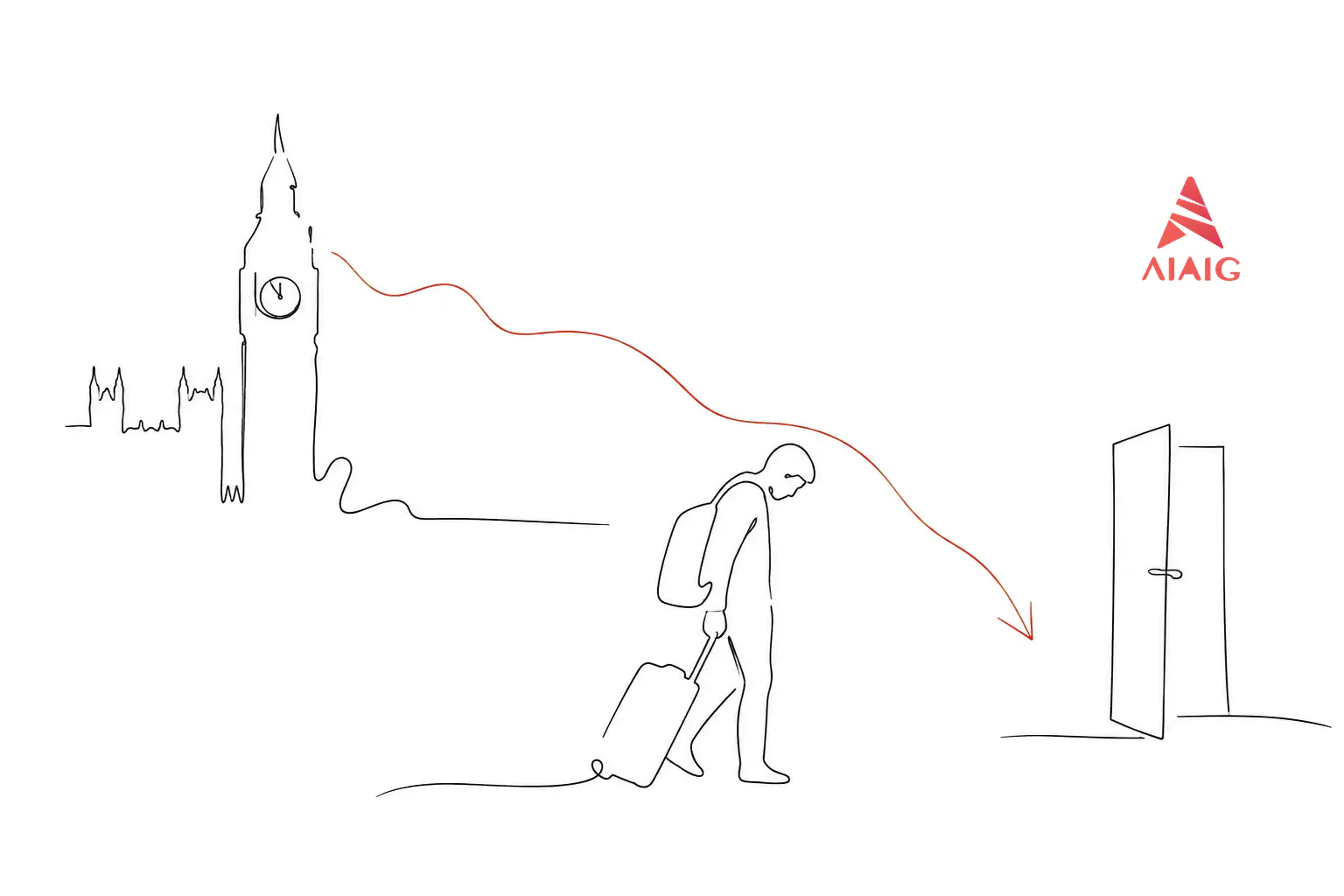
On May 14, 2026, the UK Home Office released new visa statistics revealing that UK study visa applications plunged 40% year-on-year in April 2026, from 14,800 in April 2025 to just 8,900 — the lowest April figure in five years.
For January-April 2026, total applications fell 33% compared to the same period in 2025. This marks the worst start to the application season since 2020.
Key Data Points
- April 2026 applications: 8,900 (vs 14,800 in April 2025), down -40% YoY
- Jan-Apr 2026 cumulative: down -33% vs 2025
- Compared to 2024 (dependant ban year): down -11%
- Refusal rates: noticeably higher than historical averages
Nous Group Director Nicholas Dillon commented that the numbers are more grim than they appear given that refusal rates are higher than in the past.
Background: Multiple Policy Headwinds
The sharp decline results from multiple converging policy changes:
1. Dependant Ban Impact
The January 2024 ban on taught master's students bringing dependants continues to suppress demand. April 2026 figures are 11% below an already depressed 2024 level, suggesting the market has not yet bottomed out.
2. Graduate Visa Uncertainty
With the UK government's announced reduction of the Graduate Route from 2 years to 18 months effective 2027, policy uncertainty has affected student decision-making even for those who would still qualify for the 2-year window.
3. Rising Costs
Visa application fees, the Immigration Health Surcharge (IHS), and tuition costs have all risen substantially, adding thousands of pounds to the total cost of studying in the UK, particularly impacting price-sensitive markets like India, Nigeria, and Pakistan.
4. Global Competition
Australia, Canada, and the US are simultaneously tightening student visa policies, triggering structural changes in the global study-abroad market. The PIE News reports that total international student enrolments across the Big Four English-speaking destinations fell approximately 24% in 2026.
Rising Refusal Rates: A Hidden Concern
Beyond the volume decline, rising refusal rates compound the problem. Dillon noted that current refusal levels are above historical averages, meaning actual approved visa numbers may have fallen even more sharply.
The UK government has strengthened student visa integrity checks through:
- Expanded interviews for applicants from more countries
- Enhanced financial scrutiny requiring detailed source-of-funds documentation
- Provider oversight strengthening regulation of lower-quality education providers
Impact on Chinese Students
For mainland Chinese applicants, this trend has dual implications:
Positive Signals
- Relatively less competition from Indian and Nigerian applicant pools
- Window of opportunity: Applying before end-2026 still locks in the 2-year Graduate Route
- GBP-CNY stability: Pound-RMB rates remain relatively favorable
Challenges
- Stricter scrutiny is irreversible, particularly on financial documentation and source verification
- Top-tier competition remains intense at G5 and Russell Group universities
- Earlier planning required: Submit applications 4-6 months in advance
AIAIG Insight
This UK study visa decline reflects a global value reassessment of international education. The key for Chinese students is to leverage the pre-2027 window when the 2-year Graduate Route is still guaranteed. A multi-destination application strategy covering Ireland, Singapore, or Japan alongside UK applications is strongly recommended.
- Does the application volume decline mean easier visa approval for Chinese students?
- Not necessarily. The decline is primarily driven by South Asian (India, Pakistan, Bangladesh) and African applicant markets where refusal rates are already high. Chinese student refusal rates remain in the single digits. Competition for G5 and top Russell Group universities will not be diluted by overall application numbers. Standard application preparation is still essential, and submissions should be made 4-6 months in advance.
- What is the Graduate Route policy for applications submitted before end-2026?
- According to the UK government's published roadmap, student visa applications submitted before the end of 2026 will still qualify for the 2-year Graduate Route post-study work visa. From 2027 onward, the duration will be reduced to 18 months. Students planning for fall 2026 intake should submit before September 2026 to lock in the 2-year entitlement.
- Which study destinations have relatively favorable 2026 visa policies?
- Ireland offers 12-month (Bachelor) and 24-month (Master) graduate work visas with relatively stable policies. Singapore provides 1-year Long-Term Visit Pass (LTVP) for public university graduates to seek employment. Japan has relaxed post-study employment pathways in 2026 with expanded Specified Skills visa channels. A multi-destination strategy should consider these alternatives alongside UK applications.
Last updated May 19, 2026