I. Economic Growth: Tourism, Catering Industry, and Real Estate Market Continue to Heat Up with Intense Investment
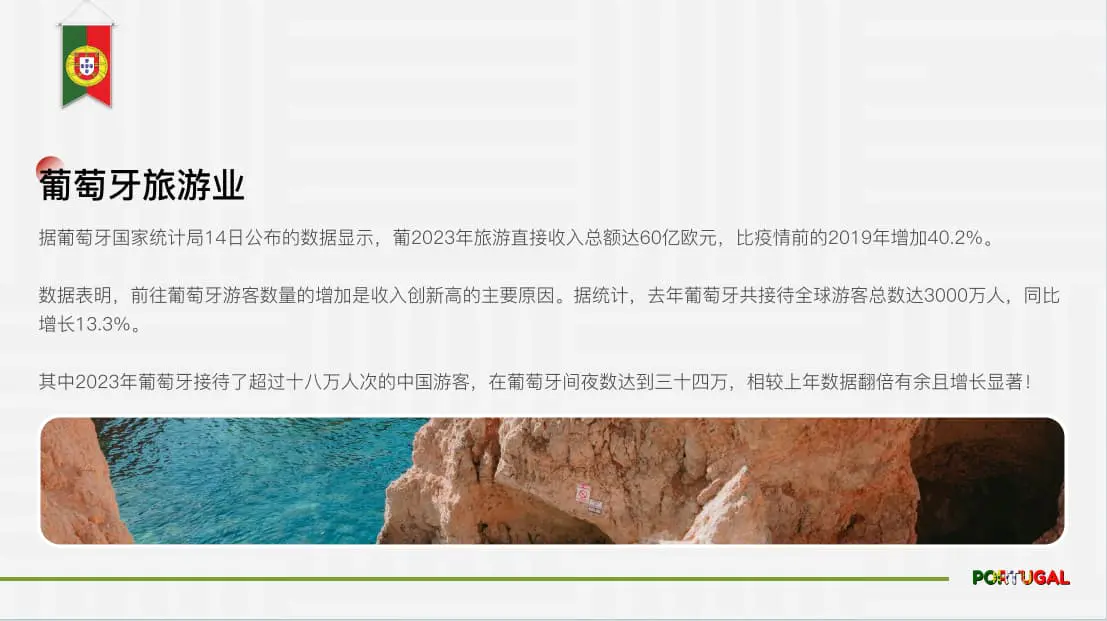
Tourism and real estate investment have shown significant pulling effects. In 2025, tourism is expected to grow by 9%, and real estate investment is projected to exceed 2.5 billion euros, an increase of 8% year-on-year. In 2025, it is expected to rank among the top 50 richest cities globally for the first time, with approximately 22,200 millionaires, a 40% growth over the past decade, and 4 billionaires, establishing itself as an emerging wealth center in Europe.
Lisbon, a popular tourist city in Southern Europe, largely recovered to pre-pandemic levels by 2022. In the first 8 months of 2025, Portugal's accommodation revenue increased by 7.9% year-on-year, with Lisbon being one of the main contributors. This has driven the hotel, catering, retail, and short-term rental markets, with over 80,000 tourism-related jobs in the city and a turnover exceeding 6.3 billion euros.
II. Education Dividend: Full-Chain Assurance from Basic Education to International Prestigious Schools
Portugal's investment in the education sector accounts for 5.8% of its GDP, compared to Canada's 5.2% and the United States' 5.7%.
According to a United Nations report, Portugal has an average of 22.2 students per class.
Excellent international schools provide comprehensive quality education.
There are ample public and private universities in Portugal. Some private institutions collaborate with the United States, the United Kingdom, Germany, France, and Switzerland to offer dual-degree programs.
Free compulsory education is implemented until the age of 18, i.e., 12th grade.
In the 2024 QS World University Rankings, Portugal has a total of 8 universities on the list, an increase of 1 university compared to 2023. The top-ranked university in Portugal remains the University of Porto, which rose 21 places compared to last year, moving from 274th to 253rd; the University of Lisbon entered the world's top 300, rising from 335th to 266th; the university with the most significant rank increase is the University of Aveiro, which jumped from the 501-510 range to 344th, directly advancing into the top 350 tier.
The newly added university on this list is ISCTE University Institute of Lisbon, ranked in the world's 751-760 range. It shows good development potential, and we can look forward to whether it will have an impressive performance in the next ranking.
III. Comprehensive Policies: Multiple Pathways to European Life
D2 Entrepreneur Immigration Visa ✅ Genuine Entrepreneurship, Peace of Mind
Obtain residency by genuinely starting a business or investing in a local enterprise (recommended investment starting from 250,000 euros), enter the country once every six months, reside for at least 7 days per year, and after 5 years, you can apply for permanent residency or citizenship.
D7 Passive Income Visa ✅ Sufficient Budget, Long-term Stay
Suitable for retirees and freelancers, with a recommended stable passive income of 2,000 euros per month (e.g., pensions, rental income, dividends, etc.), and deposit 12 months of living expenses in a Portuguese bank (recommended 30,000 euros for the main applicant). This grants a 2-year residence permit, requiring at least 183 days of residence per year, and after 5 years, you can apply for permanent residency or citizenship.
Golden Visa: ✅ Want Convenience, Have Enough Money
Purchase a 500,000 euro Portuguese fund or invest 250,000 euros in cultural heritage maintenance, with an average residence of 7 days per year or a cumulative 14 days over 2 years. After 5 years, you can apply for permanent residency or citizenship.
Choosing Portugal is not just choosing a sun-kissed, historically rich land, but also choosing a future that is safe, comfortable, and gently wrapped in a beautiful life.
Last updated Dec 5, 2025