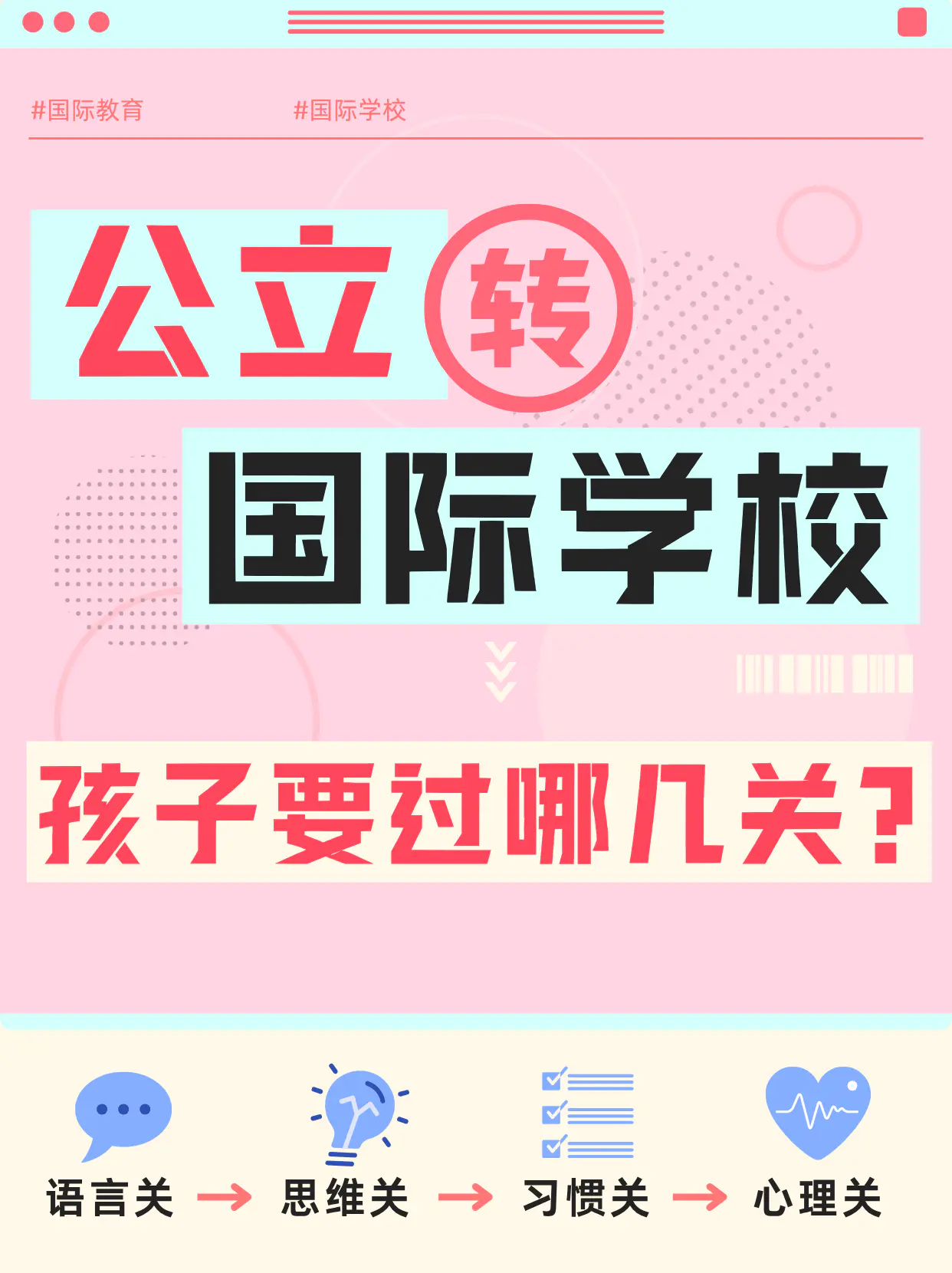
Every year, many families transition from public schools to international education. What makes this path so challenging? In summary, children typically face four hurdles:
First Hurdle: Language Barrier – Gap in Academic English 🗣️
High scores in public school English exams do not guarantee understanding, reading, or writing in an international classroom.
- Listening: Foreign teachers speak fast and use many subject-specific terms; children may be completely lost in the first week 😵
- Reading: Science and humanities textbooks have large vocabularies, and extended reading involves original literature 📚
- Writing: Jumping from "writing sentences" to "writing essays" requires opinions, logic, and citations ✍️
Preparation advice: Start strengthening academic English input six months in advance, such as original science books, documentaries, and practice retelling content in English.
Second Hurdle: Thinking Mode – From "Finding Answers" to "Asking Questions" 💡
Public education emphasizes standard answers, while international schools (especially IB) value inquiry and critical thinking.
- Classroom style: Teachers often ask "What do you think?" or "What other possibilities are there?" instead of "Which one is correct?" 🤔
- Assignments: Project-based learning, research, reflective journals – no fixed templates 📝
- Assessment: Process-oriented evaluation accounts for a high proportion; class discussions and group work are graded ✅
Preparation advice: Have more open-ended conversations at home, like "Which plan do you think is better? Why?" to help them get used to expressing opinions.
Third Hurdle: Study Habits – From "Being Arranged" to "Self-Management" ⏰
Public schools have packed schedules with teachers closely monitoring; international schools have plenty of free time.
- Self-study periods: No one pushes; children may daydream or play on their phones 📱
- Long-term tasks: A project may last weeks; without breaking it down, they may procrastinate until the deadline 🌙
- Self-discipline: Teachers don't check daily, but unfinished work eventually shows in grades 📉
Preparation advice: Start cultivating time management before the transition – use task lists, weekly planners, and let children arrange their own homework and leisure.
Fourth Hurdle: Psychological Adjustment – From "Top Student" to "Average Peer" ❤️
Many children who were high achievers in public schools find that their English, expression, and talents lag behind peers in international schools.
- More dimensions of comparison: Not just grades, but also sports, arts, leadership, social skills 🎨
- Changed incentives: No rankings, no "Three Good Students" awards; children may lose familiar goals 🎯
- Integration takes time: New classroom culture, new social circles; introverted children may take a semester to adapt 🤝
Preparation advice: Tell your child in advance that "success here comes in many forms"; pay attention to emotions early in the transition and help them find one or two clubs of interest to build confidence.
A Word to Parents 💬
Transitioning is not just changing schools – it's changing the way of learning. Each of these four hurdles requires time and patience, but preparation can help children avoid many detours.
If you are considering a transition, feel free to leave a comment or send a private message. 📩
Last updated Apr 30, 2026