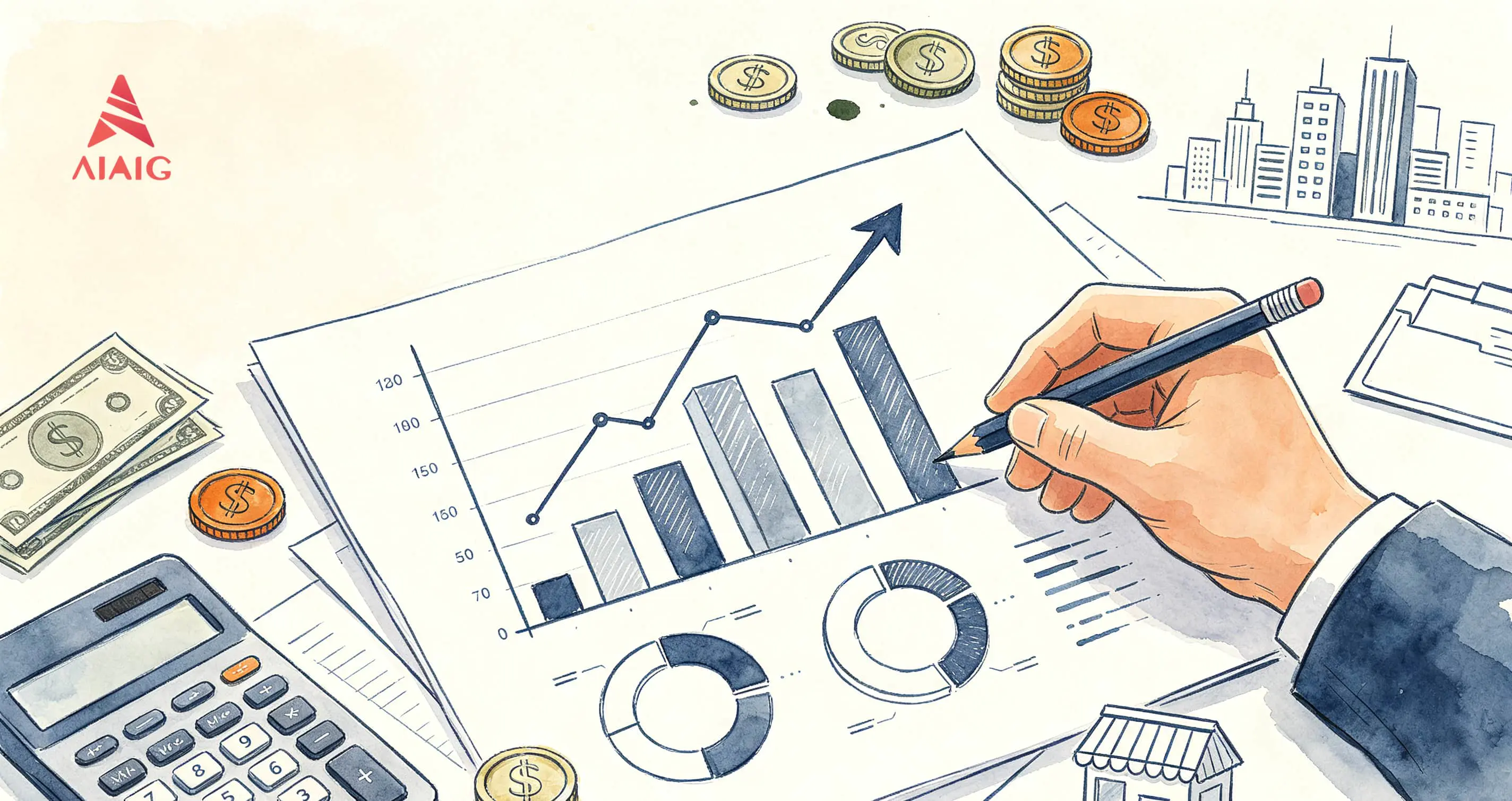
Thailand H2 2026 Economic Signals
Among major Southeast Asian economies, Thailand is showing a rare set of divergent figures: inflation fell sharply to 1.95% in July from 2.42% in June, approaching the lower edge of the central bank's 2% target; the average wage index jumped to 130.26 in Q1 from 122.39 in Q4 2025, a single-quarter gain of more than 6%; while annual GDP growth slowed to 1.90% in Q2, notably below the previous two quarters. This combination of low inflation, rising wages, and slower growth is reshaping the narrative around Thailand as an asset-allocation destination in Southeast Asia.
For overseas Chinese investors, Thailand's question is no longer whether to pay attention, but how to time entry and choose asset classes amid falling inflation and a gently rising property market. This article breaks down the fundamentals and investment implications using the latest CPI, wage, housing, FDI, and tourist data.
Q1: What does inflation dropping to 1.95% mean for Bank of Thailand policy?
June's 2.42% fell to 1.95% in July, a nearly 0.5-point single-month drop that is now below the central bank's 2% midpoint target. The move, larger than expected, was driven mainly by lower commodity and energy prices, subdued domestic demand, and base effects. Low inflation has preserved room for rate cuts — if GDP keeps weakening (Q2 only +1.90%), the central bank is likely to ease further on the grounds of victory over inflation, supporting the baht and rate-sensitive assets.
Q2: Does the 6% single-quarter wage jump reflect real demand or statistical noise?
The average wage index rose from 122.39 to 130.26, a 6.4% gain — a rare acceleration signal in recent years. This reflects both market forces from tourism-driven services and construction labor shortages, and government minimum-wage hikes. Rising wages on one hand support consumption and housing purchasing power, but on the other squeeze corporate margins, which may explain sluggish industrial and export expansion. For investors, wage growth is a leading indicator of domestic demand recovery, favoring consumer, property, and retail assets.
Q3: Housing at 162.70 keeps rising — where is the certainty in Thailand's property market?
Thailand's housing index rose from 162.40 in May to 162.70 in June — gentle but continuous gains, led by Bangkok's core areas and tourist cities like Phuket and Chiang Mai. Under low inflation, rate-cut expectations, and a weaker dollar, baht-denominated assets look attractive to foreign capital. Thailand also offers foreigners a condo freehold pathway — foreign buyers may purchase units up to 49% of a project — one of the few Southeast Asian markets allowing direct ownership. Combined with low airfares and visa-free policies, demand for second-home and resort-style investment remains strong among overseas families.
Q4: FDI of 90.099 billion baht per quarter — where is the money flowing?
Q1 FDI inflows reached 90.099 billion baht (~USD 2.7 billion), concentrated in manufacturing, data centers, and new-energy supporting industries. Thailand is capturing some capacity relocation amid global supply-chain restructuring; with digital ecosystem and infrastructure upgrades, foreign confidence in medium-term growth is unshaken despite the short-term GDP slowdown. Sustained FDI is the lifeblood of Thailand's asset pool, structurally supporting office, industrial, and logistics property, while residential elasticity depends more on domestic demand and tourism.
Q5: Does GDP slowing to 1.90% pose a risk signal?
Q2's 1.90% year-on-year growth is indeed below expectations, but structurally: the slowdown comes mainly from weak external demand and base effects, while domestic drivers (tourism, consumption, wages) remain resilient. Unemployment is just 1.00% (Q2), near full employment. Overall, Thailand is in a transformation phase of cold external, warm internal — external orders fluctuate while internal consumption and wages stay firm. In such economies, hard assets (property, REITs) tend to better withstand growth volatility than cyclical equities.
AIAIG View
Thailand's most notable signal is the domestic demand combination of low inflation, near-full employment, and rising wages. For overseas Chinese investors, we suggest three entry points: first, mid-to-high-end condos in Bangkok and tourist cities, capturing both rate-cut expectations and the openness of foreign ownership alongside exchange-rate and capital-gain opportunities; second, REITs and hotel assets, which benefit directly from tourist data under visa-free policies; third, treat Thailand as a defensive allocation in a Southeast Asian portfolio, hedging against the higher volatility of economies like Vietnam and the Philippines. With inflation falling, possible central-bank easing, and a stabilizing baht, Thailand's risk-reward profile is improving — but keep watching Q3 GDP and export data, as external drag could still transmit into domestic demand through trade channels.
Last updated Aug 31, 2026