Global Insights
International Insights, Global Perspective
AIAIG Opinion
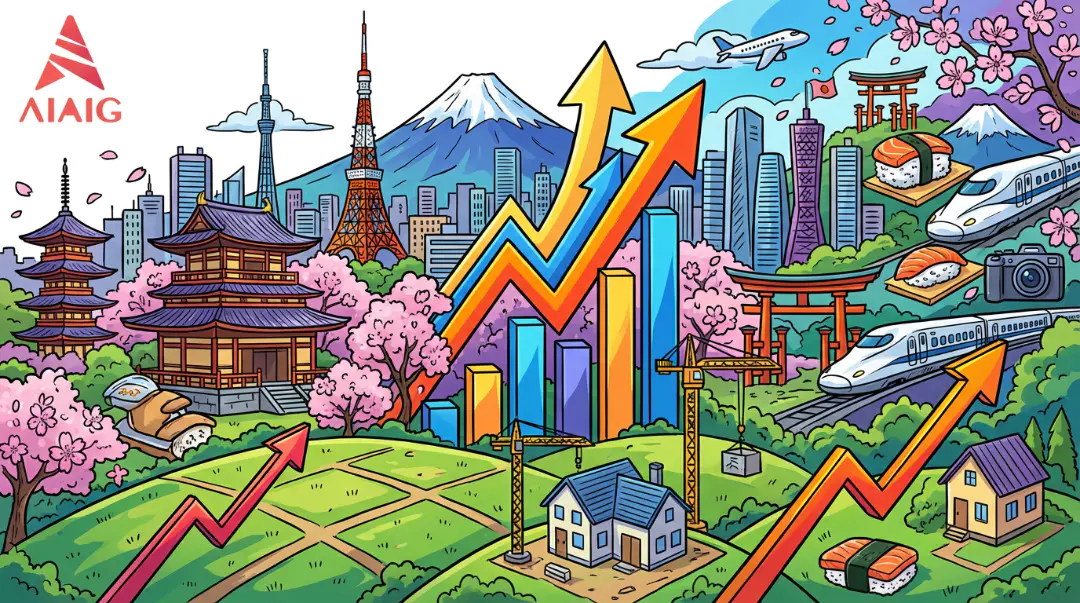
Japan's Land and Tourism-Driven Housing Price Rise: Where Are the Next...
The recovery of Japan's housing and land prices in recent years is not driven solely by a 'nationwide surge,' but by three overlapping forces: inbound tourism recovery, redevelopment and transportation hub upgrades, and capital revaluation of local industries and resort economies. This article avoids emotional hype about 'hotspot cities' and instead uses official land price announcements, JNTO tourism statistics, and public project trends to analyze: why tourism boosts commercial and residential land, what types of cities are more likely to transform 'tourism heat' into 'housing and land price elasticity,' and which areas, despite high popularity, also face risks of overheating, seasonality, and resident backlash.

AIAIG Opinion
Japan's Latest Policies for Attracting Foreign Talent and Tech Immigration:...
Japan's recent 'talent attraction' efforts are not just about visa relaxation but involve multiple pathways for different groups: high-skilled (Highly Skilled Professional/J-Skip), mid-skilled in shortage occupations (Specified Skilled Worker), short-term remote workers (Digital Nomad Designated Activities), and business/management visas (Business Manager) that emphasize 'genuine business and employment contributions' amid stricter regulations. This article uses a tool-based framework to outline: each pathway's positioning, key thresholds, available residency and family arrangements, renewal/long-term status logic, and practical impacts of 2025–2026 regulatory adjustments on 'tech immigration planning'.
AIAIG Opinion
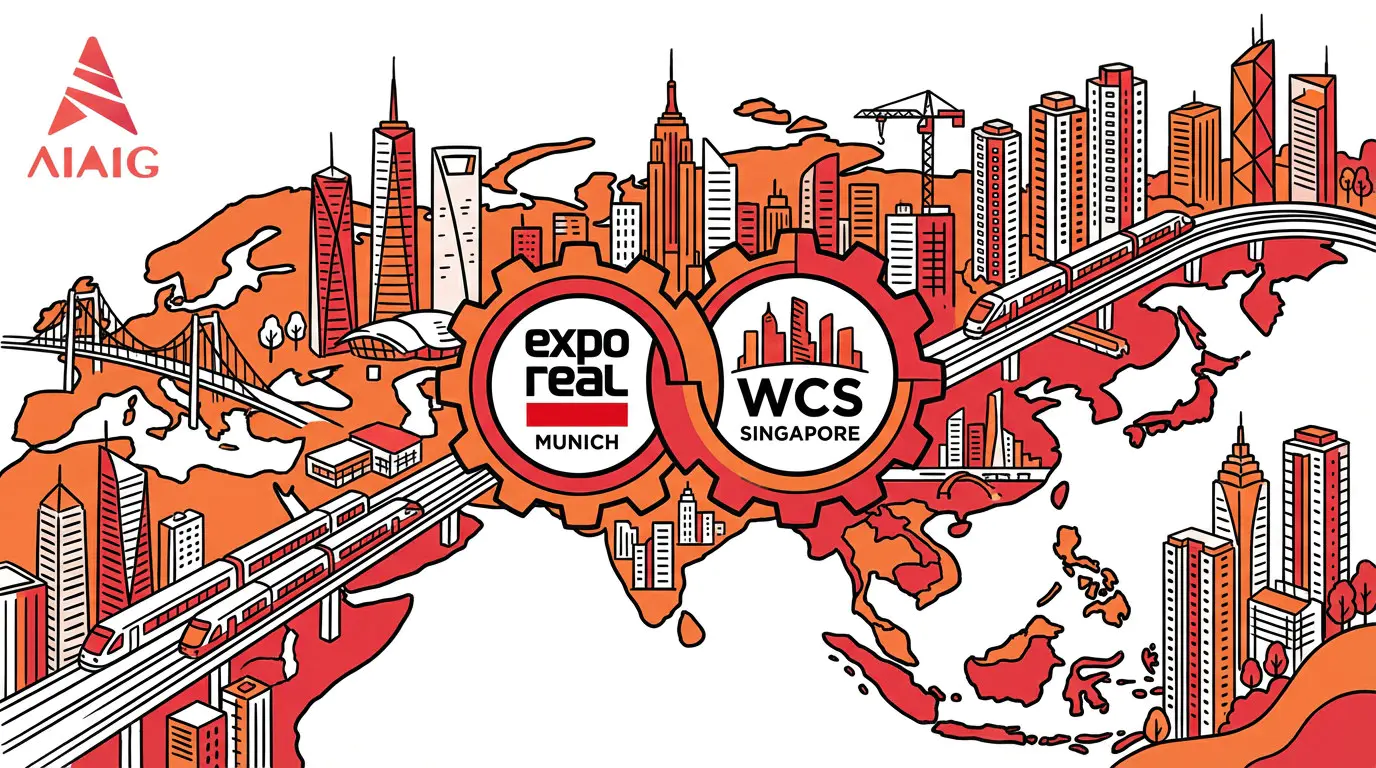
2026 Asia Real Estate & Infrastructure Summit Highlights: EXPO REAL (Munich)...
As of March 2026, WCS (World Cities Summit) has announced its 2026 theme and agenda framework, linking with 'EXPO REAL Asia Pacific' and 'Asia Infrastructure Forum'; EXPO REAL (Munich) has also confirmed its 2026 dates and core topics. This article, in a 'tool-based hot topics delivery' style, breaks down public information from both platforms into actionable checklists for participation and investment analysis: which sectors are likely to be focal points (AI and urban governance, green finance, urban renewal and housing, data centers and infrastructure, etc.), which content is more likely to translate into policies and funding implementation, and the Q&A and due diligence indicators that investors/developers/institutions should prepare before the events.

Newest Policy
Middle East Escalation Rattles Global Markets, Tests China's Diplomacy
allowlist domain crawl Latest news on Hong Kong, China, Asia and the world | South China Morning Post Advertisement Advertisement - News + FOLLOW Asia World Hong Kong China Southeast Asia Video | Philippine overseas workers under fire as Iran conflict worsens

AIAIG Opinion
4 Structural Trends in Southeast Asia's Real Estate: Remote Work,...
The main drivers of Southeast Asian real estate are no longer just 'demographic dividend + urbanization,' but are being reshaped by four structural variables: remote/hybrid work changes living radii and office differentiation; rail transit and regional connectivity upgrades alter land price gradients; AI and data centers bring new industrial real estate and power constraints; climate risks, energy consumption, and insurance costs are being repriced. This article breaks down each trend's mechanisms, impacts on residential/office/logistics/industrial parks, and actionable indicators and checklists for investors.

AIAIG Opinion
Southeast Asia 8-Country Investment Immigration Comparison: Minimum...
Breaking down 'Southeast Asia investment immigration,' you'll find most countries offer 'long-term residency/visas' rather than immediate permanent residency or citizenship. This article uses a single comparison table to horizontally compare Singapore, Malaysia, Thailand, Indonesia, Philippines, Vietnam, Cambodia, and Laos across eight aspects: minimum capital thresholds, available resident rights (work/business/bring family/buy property, etc.), pathways for renewal and conversion to permanent residency (or long-term status), and key restrictions (stay duration, fund lock-in, compliance reviews, non-transferable clauses).
.jpg?imageView2/2/w/3840/q/75/format/webp)
AIAIG Opinion
Singapore Real Estate Investment Trends: Post-Pandemic Office Market Recovery...
In 2026, Singapore's commercial real estate narrative is shifting from 'post-pandemic recovery' to 'supply-demand rebalancing': office space is once again becoming a preferred asset class for investors, with capital increasingly concentrated in high-quality (Grade A) buildings in the core CBD. This article uses a tool-based framework to analyze: what the office recovery entails (flight-to-quality and core resurgence), why the core CBD attracts more capital (liquidity/financing/lease certainty), and how investors can use quantifiable metrics to select assets while avoiding risks from 'aging offices' and refinancing.

AIAIG Opinion
Singapore GIP 2026: Investment Paths, PR/Citizenship Planning
Singapore's Global Investor Programme (GIP) is essentially 'trading genuine business/capital commitments for PR pathways.' By 2026, three investment options are available: A (business investment S$10m), B (GIP fund S$25m), C (family office AUM≥S$200m with at least S$50m transferred and deployed as required). This article uses a tool-based framework to analyze: target groups, thresholds and materials, timeline from AIP to final PR, hard indicators for REP renewal, and key planning points and common pitfalls for 'PR→citizenship' in practice.

AIAIG Opinion
2026 Asia Real Estate Investment Trends: Capital Inflows & Asset Allocation...
Multiple institutions are more optimistic about Asia-Pacific commercial real estate in 2026: CBRE forecasts a 5–10% year-on-year increase in investment volume, with office assets regaining top investor preference. Office leasing demand continues to recover, driven by 'prime locations + high-quality buildings'. This article breaks down 2026 capital flows and asset differentiation in a practical, actionable way, offering asset allocation frameworks and risk control checklists for various investors (stable income/family offices/allocative/opportunistic).
Education Migration
Tim's School Choice Insights: International Schools' Empowering Approach

AIAIG Opinion
Investment vs. Descent Citizenship: Which Path Is Better? | Cost, Timeline,...
The key difference between 'Investment Immigration (including residency/golden visa/CBI)' and 'Citizenship by Descent/Ancestry' is that the former exchanges funds for access rights, heavily influenced by political and housing issues, while the latter is based on bloodline/identity laws, with cumbersome materials but often more stable once recognized. This article uses a tool-based framework to break down the real costs, timelines, policy stability, and failure points of both paths, providing an AIAIG-reusable 'Target Audience Selection Table + Material Checklist + Risk Warnings + Decision Flowchart'.
AIAIG Opinion
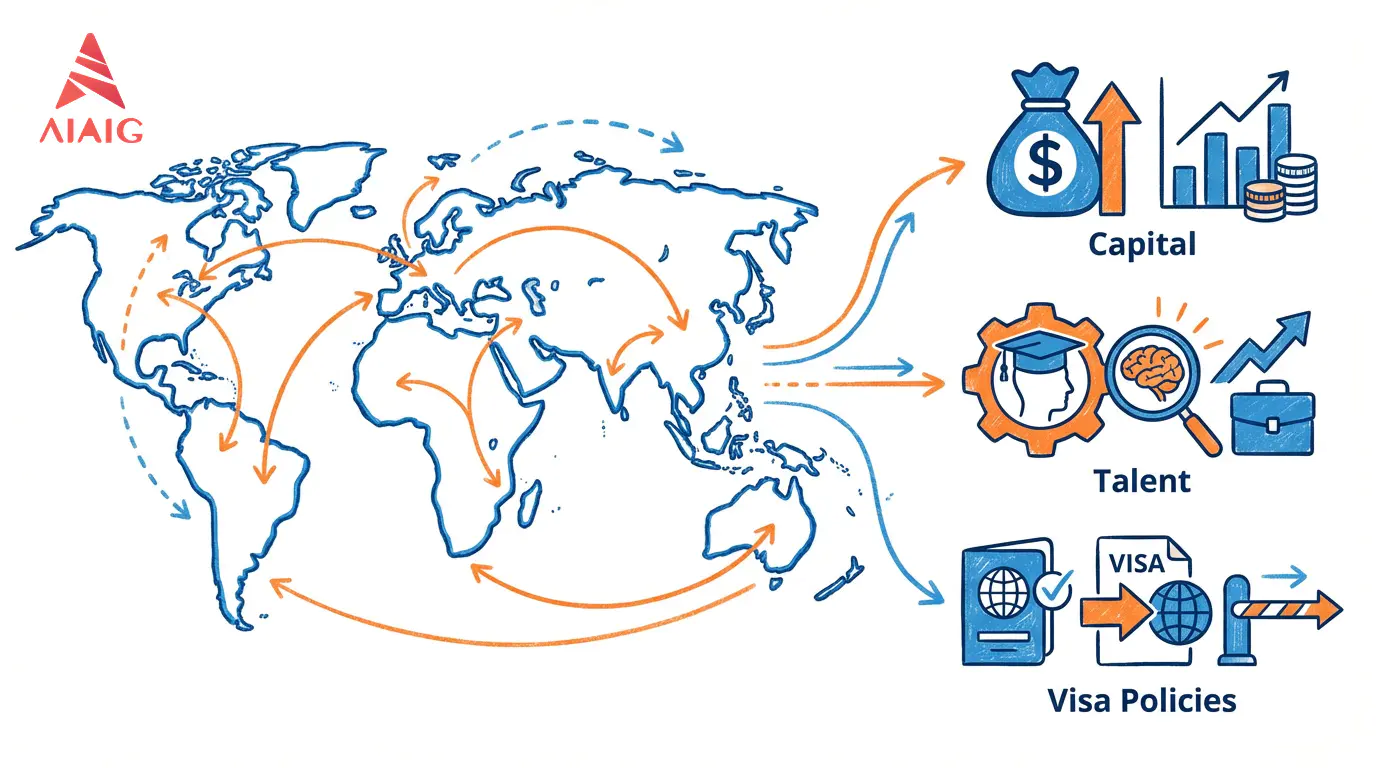
2026 Global Migration Trends: Capital, Talent, and Visa Policies
Over the past two years, many developed economies have emphasized 'filling labor gaps and boosting productivity' while imposing stricter requirements on immigration volume, thresholds, and compliance: work visas focus more on high skills and high salaries, temporary and student visas emphasize 'sustainable capacity,' and investment immigration (especially real estate-based) has seen significant contraction in Europe. Based on recent policy changes and official documents from Hong Kong, Europe, America, and Oceania, this article outlines three key trends likely to continue over the next 2–3 years: competing for talent, controlling total volume, and tightening investment immigration, providing a content map and checklist for AIAIG's topic selection and landing page development.