Global Insights
International Insights, Global Perspective

AIAIG Opinion
Singapore Q1 2026 Multi-Signal Analysis: Housing Index Holds at 210.70, FDI Surges to S$55.7 Billion, Prime Land Prices Hit New Highs — How Should Overseas Chinese Investors Position?
Singapore's Q1 2026 economic and housing market signals are converging: private home price index holds at 210.70 points, net FDI inflows surge to S$55.7 billion, CDL-Hong Leong JV bids record S$1,865 psf for Peck Hay Road GLS site. With GDP growing 1% QoQ and inflation at 1.8%, how should overseas Chinese investors interpret these signals? AIAIG provides deep analysis.

AIAIG Opinion
UK Housing Market May 2026 Signal Analysis: Prices Up Just 0.5%, Inflation Drops to 2.8%, Mortgage Rates Still at 6.6% — Should Overseas Chinese Investors Buy or Wait?
UK housing market data for May 2026 reveals a delicate balance: average house prices at £298,806 up just 0.5% YoY, inflation cooling to 2.8%, mortgage rates holding at 6.6%, and consumer confidence slowly recovering to -23. AIAIG decodes the signals for overseas Chinese investors.
AIAIG Opinion
South Korea Consumer Confidence Surges to 106.1 in May 2026 — FDI Inflows, Housing Recovery, and What It Means for Foreign Investors
South Korea’s Consumer Confidence Index surged 6.9 points to 106.10 in May 2026, the largest monthly jump since 2024. With Q1 FDI reaching USD 6.4 billion and housing prices stabilizing at 100.87, AIAIG analyzes the investment logic and risk boundaries behind Korea’s market recovery.

AIAIG Opinion
Thailand Housing Index Edges Down to 161.40 in April — Nominee Crackdown Reshapes Phuket and Koh Samui Villa Markets: What Overseas Chinese Investors Need to Know
Thailand's April housing price index dipped 0.06% to 161.40 as the 23-agency nominee crackdown begins reshaping resort property demand. Phuket and Koh Samui villa transactions drop 30%-40%, while compliant condos and long-lease projects emerge as the new focus. Deep analysis of Thailand's 3-year property outlook for overseas Chinese investors.

AIAIG Opinion
Canada 2026: Home Prices Down 20%, Rents Fall for 19 Straight Months — How Immigration Cuts Are Reshaping the Housing Market
While housing affordability deteriorates globally, Canada is experiencing a rare price and rent correction: national home prices ~20% off peak, rents down 7.4% YoY for 19 consecutive months. Canada's Oct 2024 immigration crackdown drove a 100K population decline in 2025 (first since WWII), fundamentally reversing housing supply-demand dynamics. For overseas Chinese investors, this creates a unique window — but Toronto and Vancouver mortgage-to-income ratios still exceed 52%. Where are the real opportunities?
AIAIG Opinion
Australia's Housing Market 'Perfect Storm' Arrives: May Auction Clearance Rate Plunges to 52%, Sydney at 49% — Is the Biggest Price Correction in 40 Years Coming?
Australia's housing market faces a 'perfect storm' of headwinds: May auction clearance rates plunged to 52% nationally, the lowest since April 2020. Sydney recorded just 49%. With high interest rates, slashed borrowing capacity, consumer gloom, and rising unemployment — how should overseas Chinese investors interpret the inflection point?

AIAIG Opinion
Philippines Housing Sales Surge 57.6% in March 2026: From PHP 8,091/sqm to PHP 12,752/sqm — What Overseas Chinese Investors Need to Know
Philippines housing sales prices surged 57.6% month-on-month in March 2026, from PHP 8,091/sqm to PHP 12,752/sqm. Remittances hit $2.9 billion, FDI reached $590 million, and GDP grew 0.9% QoQ. AIAIG deep-dives into the strongest housing signal in Southeast Asia.

AIAIG Opinion
Hong Kong Residential Property 2026 Deep Dive: RVD Data Shows Moderate Price Recovery Amid Rental Yield Pressure
Hong Kong's RVD released the 2026 Property Review. Residential price index up 0.6% MoM. Centa-City Index at 157.45, still 17.7% below the 2021 peak. AIAIG analyzes investment opportunities across data, costs, and risk dimensions.

AIAIG Opinion
Japan's 2026 Inheritance Tax Reform: End of the 'Tower Mansion' Loophole
Japan's 2026 tax reform will close the 'tower mansion' inheritance tax loophole. New rules require rental properties acquired within 5 years of inheritance to be valued at market price.
AIAIG Opinion
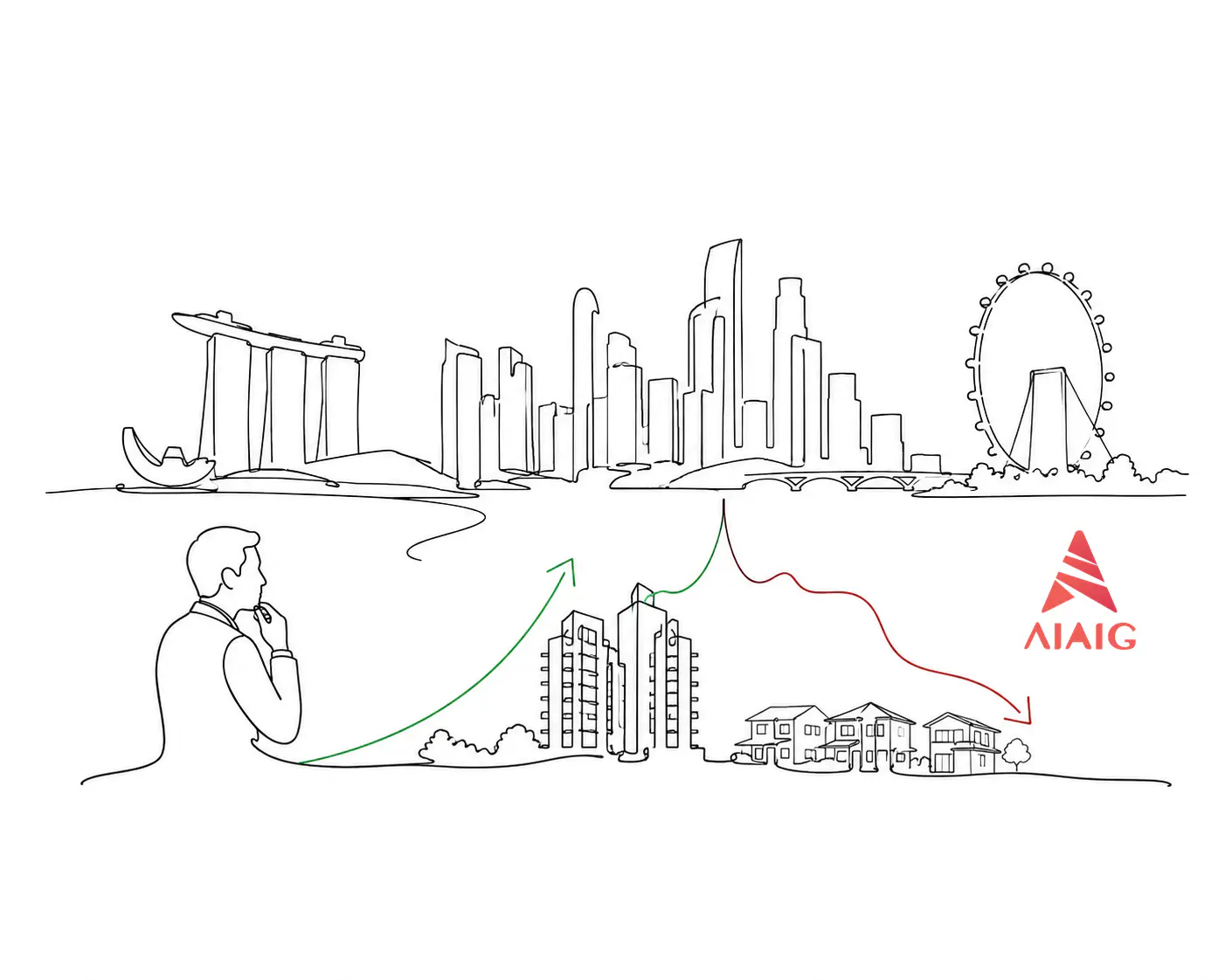
Singapore Q1 2026 Property Market Divergence: Private Home Prices Beat Estimates (+0.9% QoQ) While Condo Rents Fall 1.2% — How Should Overseas Chinese Investors Interpret This Signal?
Singapore’s URA Q1 2026 data reveals a rare market divergence: private home prices rose 0.9% QoQ, beating flash estimates, while non-landed residential rents fell 1.2%. This unique price-rent divergence carries critical decision signals for overseas Chinese investors.

AIAIG Opinion
Malaysia 2026 Foreign Buyer Property Costs: What’s Beyond the 8% Stamp Duty? — A Complete Cost Breakdown for Overseas Chinese Investors
Malaysian property looks “cheap,” but for foreign buyers, hidden costs — from the 8% stamp duty to the 30% RPGT, state consent fees, and lower financing margins — can push actual outlay 11% above the headline price. Based on a Business Times Singapore investigation, this article dissects the true cost structure for overseas Chinese investors.
AIAIG Opinion
Greek Housing Price Growth Slows in 2026: First Land Price Drop in 8 Years Signals Market Turning Point
After 8 consecutive years of price increases, the Greek property market is showing clear signs of deceleration in 2026. National land prices have fallen 1.7% for the first time, home price growth narrowed from 8.8% to 7.9%, and rent growth is slowing. While demand remains strong at +12%, seller willingness to negotiate is growing.