Global Insights
International Insights, Global Perspective
AIAIG Opinion
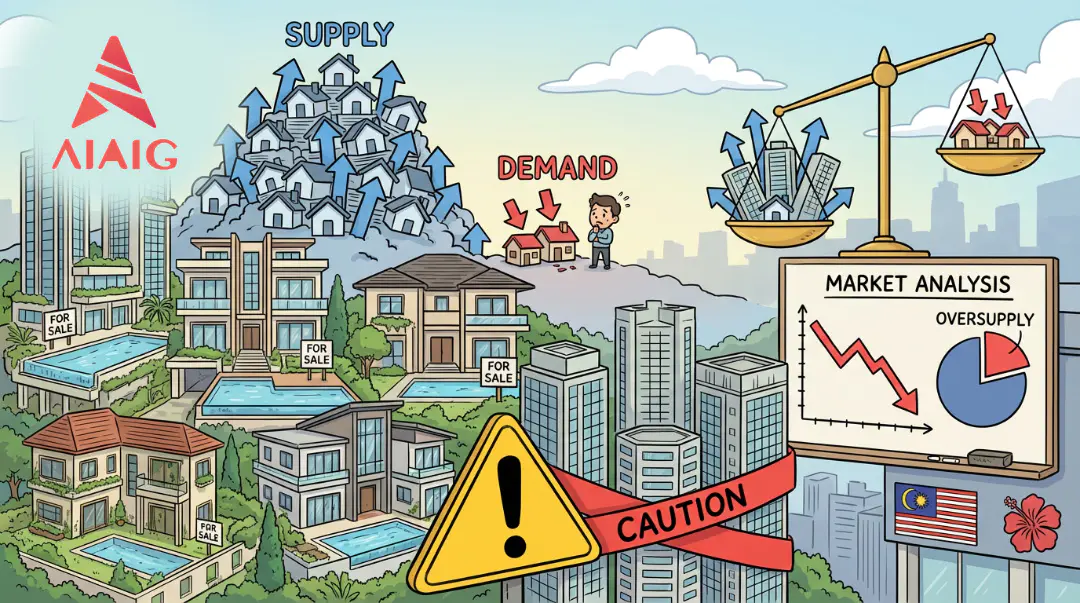
Is Malaysia's Luxury Property Market Over-Supplied? Analyzing KL's High-End...
To assess whether Malaysia's 'luxury/high-end condos' are over-supplied, one must look beyond perceptions or individual project popularity. Key factors include the pace of high-end supply entering the market, absorption capacity in secondary and rental markets, and inventory pressure for 'high-rise/service apartments' nationally and in Kuala Lumpur. This article uses NAPIC (JPPH) data on residential overhang and market reports as a foundation, combined with institutional insights on prime residential supply-demand in KL, to provide an actionable framework: identifying segments with potential structural oversupply, manageable supply, and key indicators for real-time verification.
AIAIG Opinion
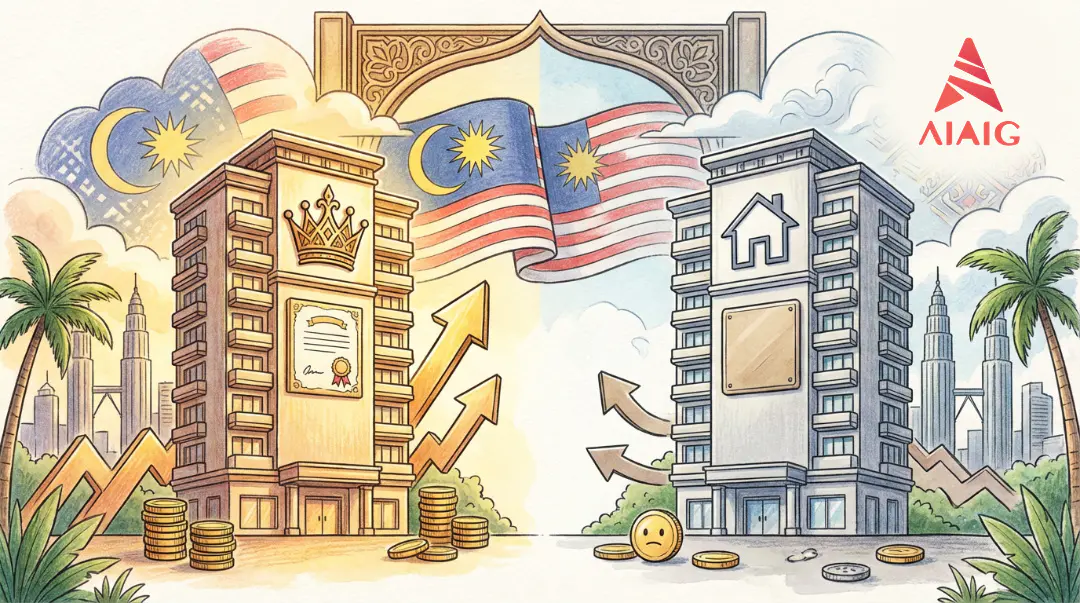
Kuala Lumpur Luxury Apartments: Branded vs Non-Branded Units | Long-Term...
In Kuala Lumpur's luxury apartment market, 'branded units' are often seen as more value-retaining, but what truly determines long-term value retention is not the logo, but rather: verifiable service delivery capabilities, fee structures, long-term maintenance mechanisms for properties and common areas, and the stability of the secondary buyer pool and rental demand. This article compares branded and non-branded units using quantifiable/verifiable dimensions (such as brand integration depth, management and operational systems, service fees and sunk costs, location scarcity, resale liquidity, compliance, and short-term rental risks), and provides a directly actionable 'unit selection/due diligence checklist + comparison table'.
AIAIG Opinion
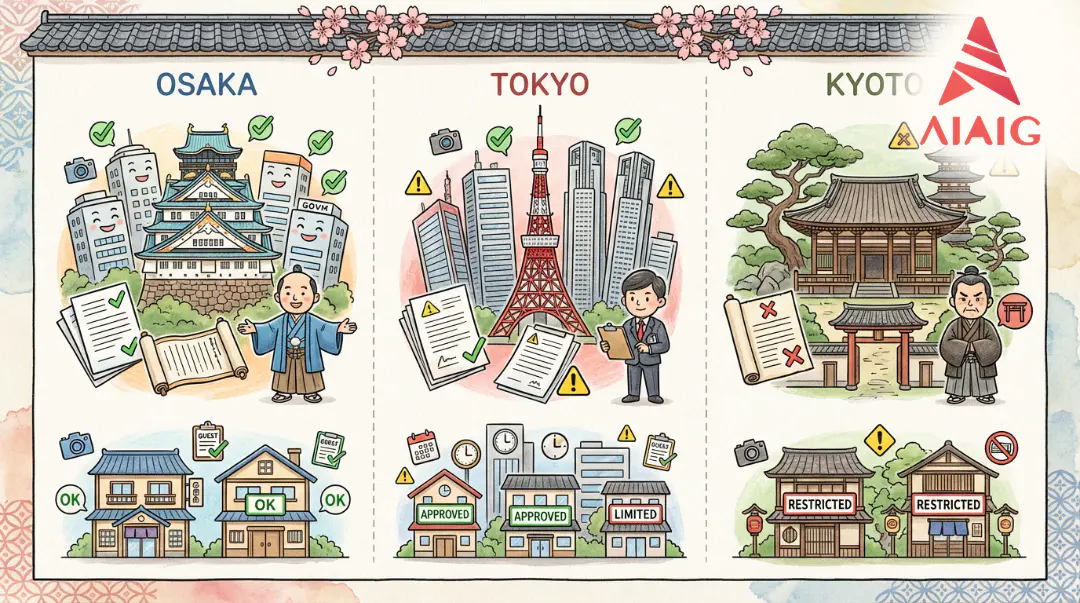
Osaka vs Tokyo vs Kyoto: Minpaku Regulation Comparison Table | Ordinance...
When operating short-term rentals or minpaku (residential lodging) in Japan, what truly determines 'whether it can be done, how to do it, and where the risks lie' is often not the national law's 180-day limit, but the ordinances and enforcement measures of local governments (cities/wards). This article compares key restrictions in Osaka (including special zone minpaku Tokku), Tokyo (using Shinjuku Ward as an example), and Kyoto City from the perspective of 'ordinance restrictions': allowable operating periods, minimum stay requirements, residential zone limitations, neighbor notification, on-site/resident requirements, regular reporting, and penalty triggers, and provides a practical compliance checklist.

AIAIG Opinion
Malaysia's Healthcare & Insurance System for Foreigners: Quality, Costs,...
Conclusion first: Malaysia's healthcare system is generally friendly to foreigners, with core advantages in the balance of private healthcare quality and price, English environment, and high compatibility with international insurance. However, long-term residence risks typically focus on age-related renewal, chronic disease coverage, rising medical costs, and differences in public healthcare accessibility. This article breaks down the real medical experience of foreigners from four dimensions: healthcare system structure, cost models, insurance compatibility, and long-term medical risks.

AIAIG Opinion
Why Tokyo and Osaka Differ on Short-Term Rentals: Policy Goals, Enforcement,...
Conclusion first: The policy differences between Tokyo and Osaka regarding short-term rentals (minpaku) stem from distinct urban governance goals. Tokyo prioritizes controlling residential order and community stability, implementing more refined and stricter operational restrictions in some areas; Osaka emphasizes tourism capacity and urban vitality, with relatively open overall enforcement but high reliance on compliant operations. This article analyzes why the short-term rental ecosystems and investment return models in the two cities differ significantly, focusing on three main lines: policy objectives, enforcement methods, and real estate investment structures.
AIAIG Opinion
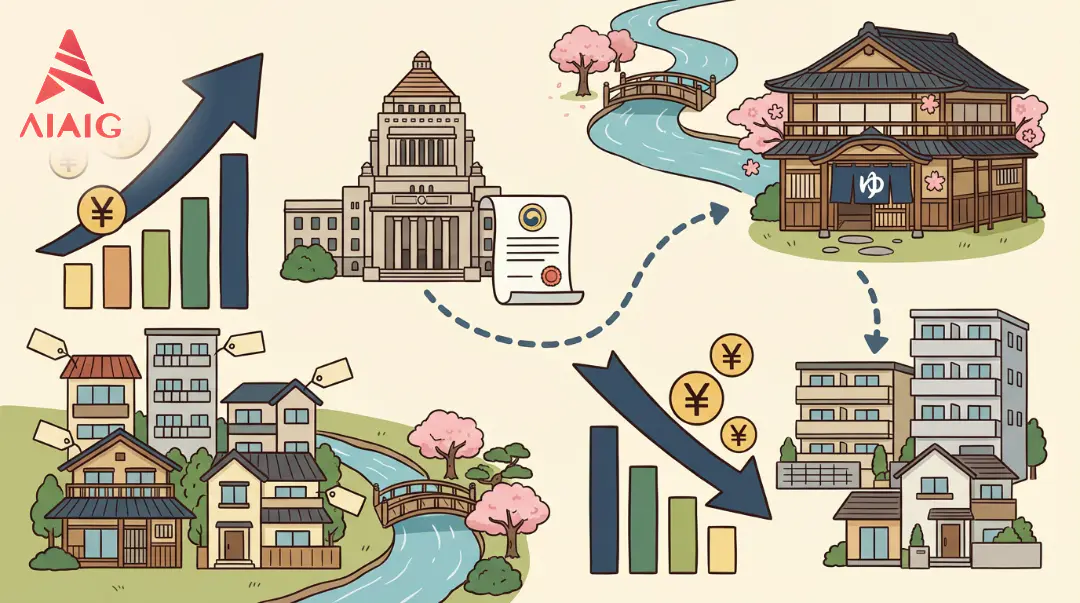
How Japan's Short-Term Rental Regulations Affect Housing Prices and Rents
Conclusion first: Japan's short-term rental (minpaku/Airbnb) regulations typically have a mild and structural impact on 'national housing prices/rents,' but significantly affect price premiums and rental structures in 'tourist hotspots + specific operational forms (e.g., special zone minpaku/partial prefecture rules) + property types and apartment management rules suited for short-term rentals.' This article analyzes through cash flow and supply-demand pathways: when regulations tighten/enforcement strengthens, short-term rental premiums shift from 'broad-spectrum' to 'more concentrated, compliant, and scarce'; simultaneously, some properties may return to the long-term rental market, locally suppressing long-term rents, but in city cores with strong inbound demand and tight hotel supply, compliant short-term rental daily rates (ADR) may remain high, forming a 'compliant license premium.'

AIAIG Opinion
AIAIG Overseas Property Investment Weekly: Global Housing and Rental Trends,...
This issue focuses on actionable insights: global real estate fluctuations stem more from capital flows and rental regulations than single price news; Southeast Asia shows divergence with Vietnam tightening speculation, Indonesia stimulating costs, and Singapore stabilizing rentals; Japan and Dubai enhance data and compliance; Malaysia sees capital return narratives, but rising foreign buyer costs reduce short-term arbitrage appeal. Useful for updating your 'next-week outlook and model assumptions'.

AIAIG Opinion
AIAIG Overseas Property Investment Weekly Report: Week 6, 2026 (Part 1) -...
This issue focuses on actionable information from the 'policy and compliance side': Singapore extends occupancy limits for rentals and maintains stable BTO supply in February; Vietnam signals a combination of 'anti-speculation tax system + more cautious credit + social housing advancement'; Malaysia requires recalculation of transaction costs and compliance budgets amid capital repatriation and increased stamp duties for foreign buyers; Japan advances information control on foreign land/housing purchases and launches a new property ownership inquiry system from February; Dubai DLD strengthens Ejari process guidance and rent index tool usage, with rental compliance remaining a core prerequisite for cash flow. Suitable as a compliance checklist for property viewing, signing, or renting this week.

AIAIG Opinion
How to Control B&B Insurance and Liability Risks? | Full-Chain Risk...
The biggest risk for B&Bs is not 'occupancy fluctuations,' but 'who is responsible, who pays, how much, and whether payment is made after an accident occurs.' This article uses an actionable risk control framework to break down common B&B liability scenarios (guest injuries/third-party damage/fire and water damage/loss of valuables/neighbor complaints/illegal short-term rental fines), and provides four layers of control measures: insurance combinations, contract terms, operational processes, and emergency plans; it also supplements key points on platform insurance differences and legal safety obligations in the context of Japanese B&Bs (minpaku).

AIAIG Opinion
How Foreigners Choose Compliant Property Management Companies: A Complete...
Choosing the wrong property management company for overseas real estate doesn't just risk vacancies; it can lead to misappropriated rent, opaque accounting, inflated repair quotes, fines for short-term rental violations, and tax penalties from missing filings. This article provides a practical screening framework for foreign owners: first, identify the type of management service (long-term/short-term/condo/whole building), then conduct due diligence based on five key criteria—verifiable credentials, segregated funds, auditable accounts, quantifiable services, and traceable responsibilities—along with essential contract clauses and red flags.
AIAIG Opinion
Foreigners Buying New vs. Used Homes in Kuala Lumpur: Process Differences,...
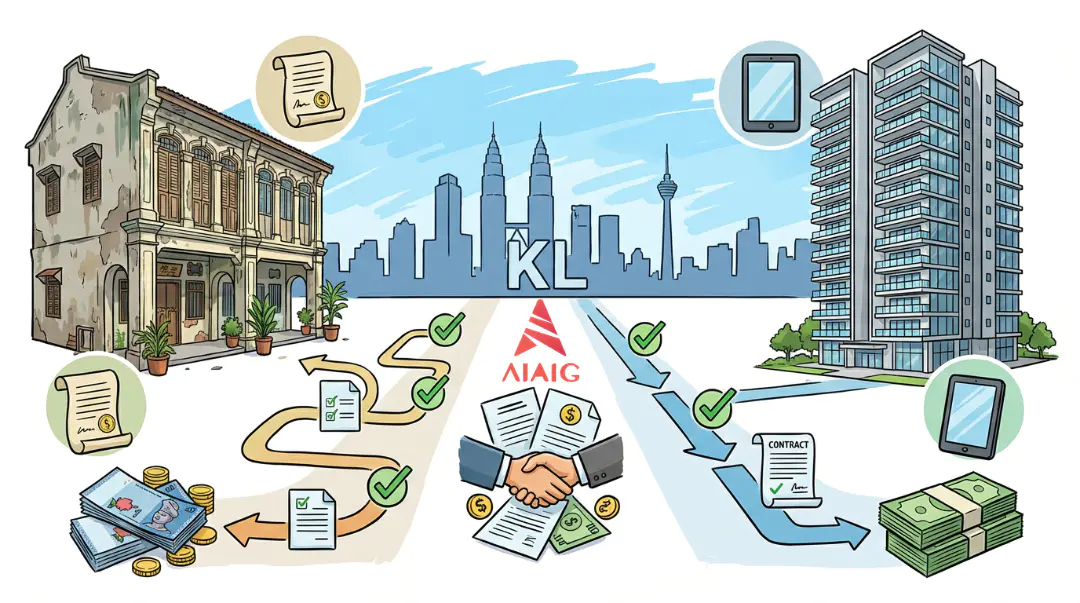
When buying a home in Kuala Lumpur, the key difference between new and used properties isn't the viewing experience, but rather: approval and documentation chains (developer delivery vs. owner transfer), payment schedules (installments vs. full settlement), title documents (DOA/Perfection vs. MOT transfer), and delivery points (VP/defect liability period vs. immediate handover and repair history). This article breaks down both paths into actionable steps using a unified framework, highlighting common pitfalls and avoidance strategies for foreign buyers.

AIAIG Opinion
How to Choose Your First Overseas Home: Goal Setting, Location Selection,...
The biggest mistake when buying a first overseas home is treating it as a 'real estate investment' rather than a 'family system issue'. The right approach is to set goals first (e.g., living, education, residency, asset allocation), then use a replicable screening framework: macro affordability → property rights and transaction transparency → financing and exchange rates → schools/healthcare → safety and commute → property management and rental → exit channels. This article provides practical 'decision cards, checklists, and red lines' without relying on tables.