Global Insights
International Insights, Global Perspective

AIAIG Opinion
Bangkok's Affluent Areas: Safety vs. Cost in 2026
Many assume that 'Bangkok's affluent areas' mean more expensive equals safer. Reality is closer to: community-level physical security is indeed stronger, but street risks still mainly come from 'opportunistic crime + nightlife scenes + traffic and travel aspects'. This article uses verifiable public information (annual police data, official travel safety advice, etc.) combined with first-hand living logic to analyze the real security differences and living experiences in areas like Sukhumvit high-end segments, embassy zones, Sathorn-Lumphini, and Ari, and provides an actionable safety checklist for buying property or long-term stays.

AIAIG Opinion
Real Life Differences in Kuala Lumpur's Affluent Areas: Mont Kiara, Bangsar,...
While all are called 'affluent areas,' the living experiences in Kuala Lumpur's high-end districts vary greatly: some prioritize walkability and social density, others seek schools and community feel, and some only accept low-density villas with ultimate privacy. This article breaks down the real differences in core affluent districts like Mont Kiara, Bangsar, Damansara Heights (Bukit Damansara), KLCC-Ampang Hilir, and Desa ParkCity across six dimensions: 'residential product types/commuting and urban connectivity/education and family scenarios/commerce and social life/security and governance/price and liquidity,' and provides a list of suitable groups and selection criteria.

AIAIG Opinion
Is Japan's Airbnb Investment Still Attractive in 2026? Demand, Regulations,...
Japan's Airbnb remains attractive in 2026, but the logic shifts from 'platform benefits/grey arbitrage' to 'demand certainty + compliance premium'. This article uses latest tourism data and regulatory updates to analyze profit margins, local enforcement differences, and actionable investment checklists under the new Minpaku Law, Hotel Business Law, and Special Zone Minpaku.
AIAIG Opinion
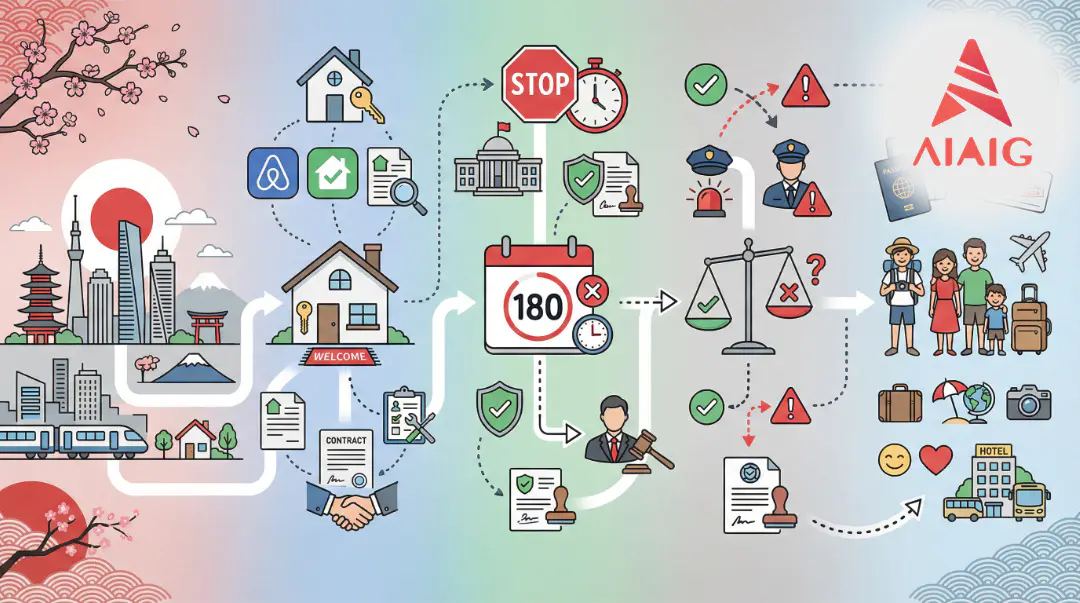
Japan's 180-Day Homestay Limit: Weakening in Practice? Regional Variations...
The 180-day cap has not been abolished, but in practice, it is often reshaped by 'system path switching' and 'stricter local rules,' leading many investors to perceive the restrictions as weakened. This article uses a three-tier model (national law → local regulations → building rules) to explain the sources of differences and provides a reusable compliance checklist and investment strategies.

AIAIG Opinion
Long-Term Value Retention: Branded vs. Non-Branded Luxury Condos in Kuala...
This analysis systematically compares the long-term value retention of 'branded' and 'non-branded' luxury condos in Kuala Lumpur across five dimensions: pricing premium, liquidity, rental stability, maintenance costs, and resale discount risks, assisting overseas investors in assessing asset safety margins and holding period strategies.
.jpg?imageView2/2/w/3840/q/75/format/webp)
AIAIG Opinion
AIAIG Overseas Property Investment Weekly: Global Trends, Rental Cash Flow &...
Statistical period: January 12–18, 2026. This report avoids speculative predictions, instead using verifiable information from the week to deduce trends: Singapore eases rental pressure through policy extensions; Vietnam curbs speculation via credit target reductions and tax discussions; Japan enhances rule predictability through transparent governance; Dubai improves rental efficiency with Ejari promotion and process standardization. AIAIG provides a reusable cross-regional assessment framework, helping investors replace simple price judgments with 'cash flow quality + institutional friction + exit feasibility'.
.jpg?imageView2/2/w/3840/q/75/format/webp)
AIAIG Opinion
AIAIG Overseas Property Investment Weekly Report: Week 3, 2026 - Real Estate...
Statistical period: January 12–18, 2026. This report focuses on three main themes: 'rental stability, foreign investment transparency, and speculation cooling.' Singapore extends the relaxation of rental occupancy limits to the end of 2028; Vietnam plans tax measures to curb real estate speculation and lowers the 2026 credit growth target; Japan expands foreign buyer reporting and collects buyer nationality information; Dubai launches Ejari awareness to enhance rental compliance; Malaysia implements a self-assessment stamp duty system with penalty waivers. AIAIG translates these changes into specific impacts on foreign buyers regarding materials, taxes, rental, and transaction friction.

AIAIG Opinion
Philippines' 14-Day Visa-Free Policy for Chinese: Key Rules, Travel Impact,...
The Philippines has announced that starting January 16, 2026, Chinese citizens can enter visa-free for 14 days for tourism or business purposes (non-extendable, non-convertible), with entry limited to Manila NAIA and Cebu MCIA, on a one-year trial basis subject to evaluation. Beyond the 'terms,' this article addresses three key concerns for Chinese travelers: the practicalities of China-Philippines travel and available scenarios, how to efficiently explore top Philippine destinations within 14 days, and VAT refunds and duty-free rules upon entry/arrival (including customs and duty-free shop regulations).

AIAIG Opinion
Russia Announces Visa-Free Entry for Chinese Citizens: 30-Day Stay, Valid...
On December 1, 2025, the Russian President signed a decree granting Chinese ordinary passport holders a temporary visa-free stay in Russia for up to 30 days, valid until September 14, 2026 (inclusive). This article outlines the scope of visa-free application, exclusions, reciprocal background with China, and highlights opportunities and key risks from perspectives such as 'Russia visits/asset allocation/project due diligence'.

AIAIG Opinion
Japan: Foreign Home Buying Enters 'Trackable Governance' with Expanded...
Japan is advancing 'foreign home buying' from a contentious issue into a regulatory framework that is countable, reviewable, and manageable in layers: on one end, reporting obligations are proposed to expand from 'investment purposes only' to 'residential use,' and on the other, the registration process plans to introduce 'nationality/nationality proof' fields to accumulate underlying data. For overseas buyers, in the short term, it's not about 'cannot buy,' but rather about upfront requirements for transaction compliance and document consistency, increased scrutiny friction for hot assets, and reduced tolerance for frequent transactions.
AIAIG Opinion
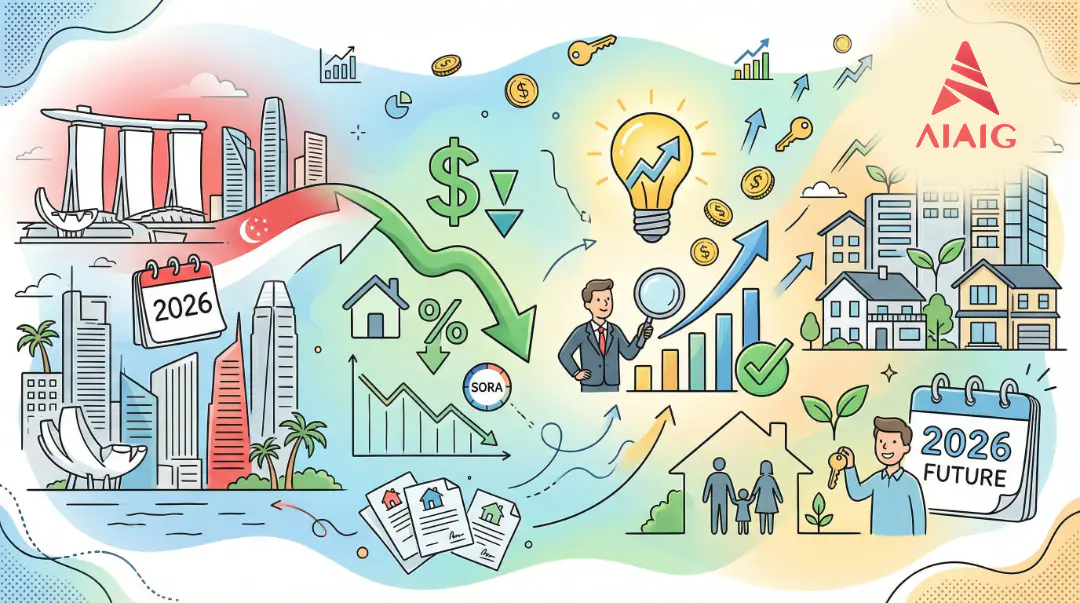
Singapore Mortgage Rate Downturn: How SORA Reshapes 2026 Property Logic
As of January 2026, Singapore mortgage rates have rapidly declined from around 3.1% in early 2025 to approximately 1.4%–1.8% (depending on loan amount and package), significantly reducing financing costs. This article focuses on the SORA rate mechanism, using the latest quarterly data from URA and HDB to analyze the impact of interest rate changes on private and public housing transactions, price elasticity, buyer structure, and 2026 risk boundaries, and provides actionable interest rate strategy frameworks for 'owner-occupation and investment'.

AIAIG Opinion
AIAIG Overseas Property Investment Weekly: 2026 Week 2 (Part 2) - Tax Hikes,...
Statistical period: January 5, 2026 – January 10, 2026. This article analyzes structural changes in property prices, rents, and liquidity in Southeast Asia, Japan, and Dubai from the perspective of 'early-year repricing': how Malaysia's foreign tax increases reshape buyer structures, Singapore sets the tone for 2026 with official indices, Japan's transparency in foreign property purchases alters transaction friction costs, Dubai enhances rental experiences through Ejari compliance and digital services, and provides AIAIG's cross-regional observation framework and risk warnings.